 admin
admin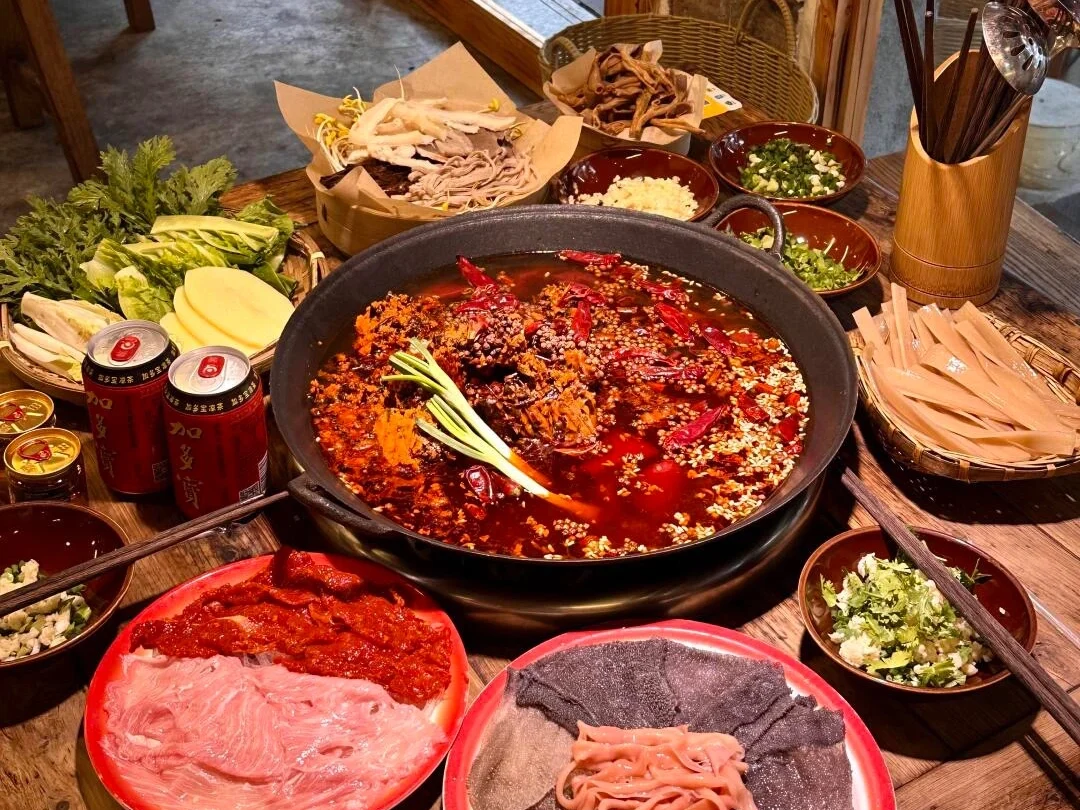
Taste Chengdu through sizzling hotpot, fragrant street snacks, and hidden local gems—where
spice, aroma, and Sichuan’s lively food culture meet in every bite.
Walking through Chengdu’s streets, the air is always rich with three aromas: the buttery depth of beef tallow hotpot, the tingling freshness of green Sichuan pepper, and the sweet scent of fried sugar pastries. This city welcomes you like an old friend, carving the word bashi—meaning “comfortable and satisfying”—into every visitor’s taste memory. Here, dieting feels like an insult to the cuisine; gaining a few pounds is proof you’ve truly embraced Chengdu life..

Sichuan cuisine’s saying “one dish, one style; a hundred dishes, a hundred flavors” finds its fullest expression in Chengdu. Beneath its famous spice and numbing heat lies a surprising inclusiveness: hotpot’s aromatic richness, skewers’ savory marinades, and spicy-sauced mala dishes all stand apart, while mild flavors like clear pork knuckle soup or soft egg pancakes quietly impress. From humble back-alley eateries serving tangy fish-fragrant pork to Michelin-starred kitchens reinventing mapo tofu as edible art, Chengdu bridges street food and fine dining. Even those who can’t handle spice will be won over by the warmth of a simple wonton soup.
What to Eat in Chengdu
Hotpot – A Bubbling Feast of Bold Flavors

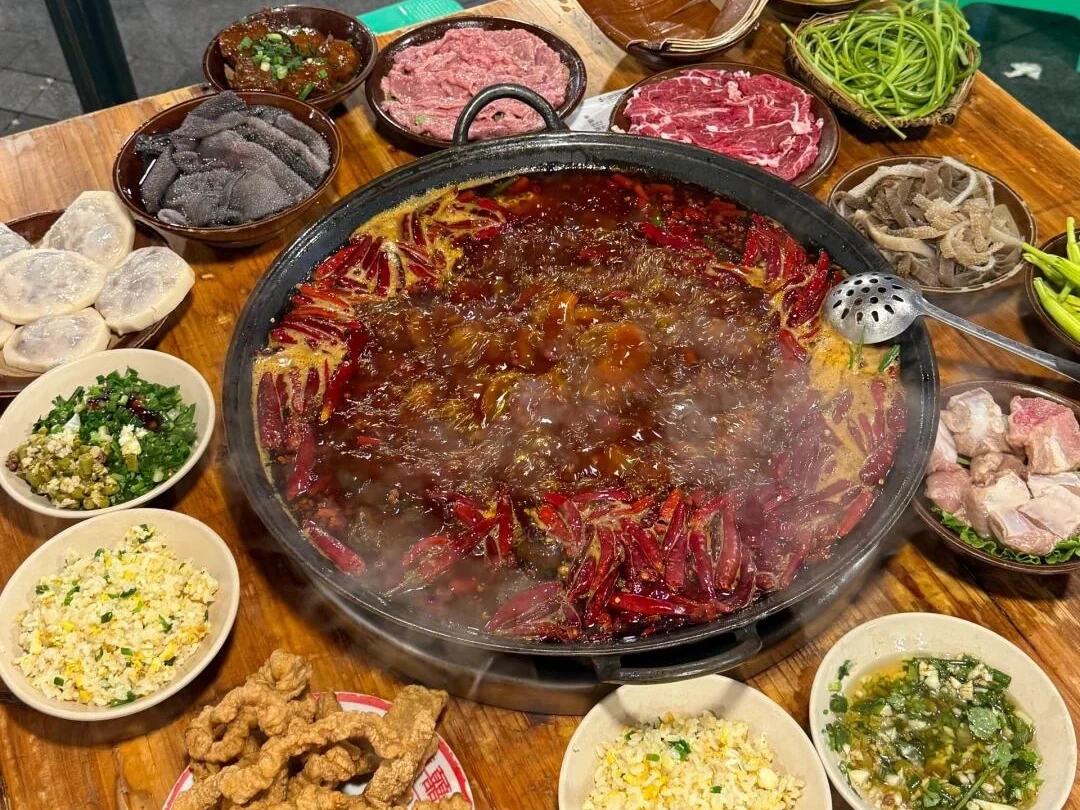
Chengdu hotpot’s soul lies in its broth—pure beef tallow simmered with Pixian chili bean paste, fermented black beans, and Hanyuan peppercorns until the red oil rolls like lava. Locals follow strict rules: beef tripe gets a quick “seven up, eight down” dip for crunch, duck intestines cook in seconds to stay tender. Classic spots like Shu Jiu Xiang serve rich copper-pot broth with sesame-garlic dip, while modern Hou Tang pairs chili-coated beef with traditional décor. The local favorite is a double-flavor pot, ending with rice soaked in the milky white broth for a hidden finisher.
Chuan Chuan Xiang – Skewers in Spicy Harmony

Chuan chuan xiang is Sichuan’s most laid-back way to eat—skewered meats and vegetables cooked in or soaked with spiced red oil. Cold pot skewers, like beef rolled with cilantro or paper-thin gizzards, are pre-cooked and steeped in fragrant oil, priced by weight. Hot pot skewers, popular in cooler months, bubble in copper pots; the pickled chili beef skewers at Yulin Chuan Chuan Xiang burst with sour-heat and meatiness. Locals advise loading up on meat skewers, then finishing with instant noodles that soak up every drop of the rich, numbing broth.
Mao Cai – Hotpot Freedom for One

Mao cai is Chengdu’s “hotpot for one”—you choose your own mix of meats, vegetables, and noodles, hand them to the cook, and they come back swimming in steaming chili oil, topped with scallions and sesame. Must-tries include mao brain—pork brain so tender it melts like tofu—balanced by a spicy kick, and mao beef tripe, each fold coated in fragrant sauce. Street-side stalls do it best; Mao Pai Mao Cai on Ma’an South Road simmers its broth for eight hours over beef bones and spices, so even a bowl of vegetables tastes deeply rich.
Mapo Tofu – The Art of Numbing Heat and Silkines

The national ambassador of Sichuan cuisine reaches peak form in Chengdu. Authentic mapo tofu uses silken cubes simmered with Pixian chili bean paste, minced beef, and Hanyuan peppercorns, capturing the “seven flavors” of hot, numbing, fresh, fragrant, savory, tender, and crisp. The old-school Chen Mapo Tofu shop serves tofu so soft it breaks under chopsticks, best eaten scalding hot over rice. Locals insist it must be tongue-numbingly spicy and fresh from the wok—only then is it truly Chengdu-style.
Fuqi Feipian – A Cold Dish with Fiery Depth

Despite the name “lung slices,” this Chengdu classic is a medley of thin-sliced beef head skin, heart, and tongue, marinated in a master stock and tossed in red chili oil with peppercorns, sesame, and cilantro. Old shops simmer their broth with dozens of spices for decades, giving the meat a deep, aromatic flavor and a hint of sweetness in the oil. Served with a crisp, baked guokui flatbread for dipping, it’s a textural dance of crunch, chew, and spice that’s pure old Chengdu tradition.
Rabbit Head & Spicy Rabbit – Chengdu’s Rabbit Obsession

Chengdu’s love for rabbit shines in its head and diced meat dishes. Braised rabbit heads are first fried, then stewed with star anise, cinnamon, and peppercorns, their rich flavor coaxed out over time; eating them is a slow, bone-by-bone ritual. On Yulin Road, locals grab a half rabbit head and a cold beer to chat into the night. For something quicker, Er Jie’s red-oil rabbit cubes are evenly diced, coated in fragrant chili oil and sesame—perfect over porridge or noodles, with sauce so good locals refuse to waste a drop.
Pig Trotter Soup – Late-Night Comfort in a Bowl

When the city quiets, pig trotter soup keeps simmering in clay pots. The trotters are slow-braised with yellow or snow peas for hours until the skin is gelatin-soft and the broth turns clear yet rich. A sprinkle of scallions brightens the flavor, but the real indulgence is dipping the tender meat into a red-oil sauce of chili bean paste, garlic, and peppercorn oil. At Liao Lao Ma Trotters on Dongchenggen Street, taxi drivers and night workers linger past 3 a.m., letting the warmth chase away the day’s fatigue.
Feichang Fen – Hearty Noodles in Red-Oil Richness

A breakfast built for spice lovers, feichang fen pairs bouncy sweet potato noodles with braised pork intestines, soybeans, and fresh herbs in a pork-bone broth. The final flourish is a ladle of sizzling red oil that stains the bowl a glossy crimson. True locals tear pieces of hot, crispy guokui bread to soak in the soup, combining chewy noodles, savory intestine, and bread for the ultimate bite. Gan Ji Feichang Fen on Ma’an South Road has been serving it for over 30 years, with clean, tender intestines and house-made noodles that regulars swear by.
Zhong Shui Jiao – Dumplings in Sweet-Spicy Harmony

Zhong shui jiao is the dry-mix champion of Chengdu snacks—chewy dumpling wrappers filled with pure pork, dressed in a fragrant blend of red chili oil, minced garlic, and sweet soy sauce. The flavor is a balanced dance of sweetness, heat, and garlicky punch. The century-old Zhong Shui Jiao shop on Zongfu Road still serves them alongside cooling bowls of suan la liang fen (hot-and-sour mung bean jelly) to cut the richness.
Long Chao Shou – Silky Wontons in Golden Broth

Long chao shou reigns as Chengdu’s soup favorite, its wonton skins thin as paper and stuffed with minced pork and whole shrimp. The broth, simmered for eight hours from chicken and pork bones, is topped with scallions for a clean, rich aroma. At the famed Long Chao Shou shop, fresh-shrimp wontons burst with sweetness; a drizzle of chili oil adds just enough heat, making it the perfect breakfast bowl.
Dan Dan Mian – Noodles with Nutty, Spicy Depth

The soul of dan dan mian lies in the ya cai pork topping—finely minced pork fried with preserved mustard greens, then spooned over springy alkaline noodles. Sesame paste and chili oil weave together nutty, spicy, and savory notes, finished with crushed peanuts for crunch. Hidden next to Gan Ji Feichang Fen on Ma’an South Road, a humble stand serves them for just a few yuan, with noodles cooked to a perfect bite.
Tian Shui Mian – Sweet, Spicy, and Boldly Chewy

Tian shui mian surprises with its thick, chopstick-wide noodles tossed in sweet soy sauce, red chili oil, and Sichuan pepper. Each bite is chewy, sweet at first, then numbing and spicy. At Zhang Lao Er Liang Fen, they add a spoon of sesame paste for extra fragrance. The secret is to mix thoroughly, coating every strand so the sauce clings to its hearty texture.
Dan Hong Gao – Fluffy Pancakes with Endless Fillings

Dan hong gao is a childhood favorite for Chengdu locals—freshly griddled cakes with crisp, golden edges and a cloud-soft center. Fillings range from the classic white sugar and sesame, which melt into sweetness on the tongue, to the indulgent cream-and-pork-floss combo, balancing salty and sweet. Adventurous eaters go for the spicy minced beef filling, where chili heat mingles with juicy meat. At He Ji Dan Hong Gao, the master flips three cakes a minute, and locals queue for a fresh one still hot enough to make you blow before biting.
Tang You Guo Zi – Golden Rice Balls with a Sweet Crunch

Tang you guo zi turns simple glutinous rice flour into street-side treasures. Dough balls are fried until crisp and golden, then rolled in sugar and sesame for a candy-like shell that shatters at first bite. Inside, the chewy, stretchy rice stays warm and comforting. Some stalls add a modern twist—drizzling with chocolate sauce for a bittersweet contrast—but many Chengdu natives swear by old market stalls, where five yuan gets you a steaming skewer fresh from the oil, simple and perfect.
San Da Pao – A Sticky, Sweet Street Performance

San da pao delivers both flavor and theater. Glutinous rice balls are pounded three times against a wooden board—thudding like firecrackers—before being dusted with roasted soybean powder and drizzled with brown sugar syrup. Watching the vendor’s rhythmic motions is half the joy; the other half is sinking your teeth into the soft, nutty, and gently sweet result. In Kuanzhai Alley, the treat is often paired with a warm bowl of fermented rice soup for a cozy, old-Chengdu experience.
Guo Kui Jia Liang Fen – Crispy Meets Cool and Spicy

Guo kui jia liang fen is a genius pairing of textures. Savory guo kui bread, baked to a shattering crunch, is split and stuffed with slippery, chili-dressed liang fen noodles for a play of hot, cold, crisp, and tender. Meat lovers choose the pork-filled guo kui for extra richness, while sweet-toothed locals go for red sugar guo kui stuffed with tangy vinegar liang fen. At Wang Ji Guo Kui in Huangtianba, the bread is always baked fresh and the noodles tossed to order—because only then does the combination hit its peak.
Where to Eat in Chengdu – A District-by-District Guide
Jinjiang District – Where Tradition Meets Trend

A district that’s both a mirror of old Chengdu flavors and a stage for new culinary creativity.
- Chunxi Road / Yanshikou – Where time-honored brands meet viral eateries. Try Zhong Dumplings with sweet-salty Lai Tangyuan on Zongfu Road, or dive into steaming cold pot skewers at Maojiao Huola for beef wrapped with cilantro and paper-thin gizzards.
- Jiuyanqiao / Lan Kwai Fong – Nightlife’s spicy battlefield. Street stalls sell garlicky, spicy stir-fried crayfish, and cold-eat rabbit chunks paired with ice-cold beer keep the energy high well past midnight.
- Niushikou – A kingdom of hidden “fly restaurants.” At Chen Popo’s Dan Hong Gao, locals order a cream-and-pork-floss plus spicy minced beef combo; at Mingting Restaurant, tofu brain with minced pork in red oil is silky, rich, and addictively spicy.
Qingyang District – Old Chengdu’s Everyday Flavor

Like a covered-bowl tea in a traditional teahouse, these dishes are steeped in time.
- Kuanzhai Alley / Kuixinglou Street – A mix of heritage and modernity. Watch San Da Pao masters pound glutinous rice balls before rolling them in soybean powder and sugar syrup, or queue for an hour at Maojiao Huola’s cold pot skewers.
- Guanghua Village – A student-favorite late-night haven. He Shifu BBQ serves sizzling pork belly with chili powder, while Xu Liang’s Roasted Pig Trotter is crispy-skinned, tender inside, and perfect for sharing on the street.
- Huangtianba – An old factory district with taste memories. Wang Ji Guo Kui makes pork-filled breads with 30 years of craft, best stuffed with spicy liang fen from the shop next door.
Wuhou District – Where Cuisine Meets Culture

Here, food shares the stage with Chengdu’s Three Kingdoms heritage.
- Yulin Road – The smoky, lively “jianghu” in Zhao Lei’s song. Visit the birthplace of Yulin Chuan Chuan for beef, gizzards, lotus root, and “mao brain” skewers, or take home hand-torn roasted rabbit from Wang Ma.
- Wuhou Shrine / Jinli – A taste journey by historic sites. Watch sugar painters craft dragons in caramel, then head to Shu Jiu Xiang Hotpot for beef tripe and duck intestines while swapping Three Kingdoms tales.
- Hongpailou – Old Chengdu’s breakfast alley. At Li Ji Cui Shao Mian, pork mince fried in lard tops alkaline noodles for a rich, spicy morning ritual.
Chenghua & Jinniu Districts – Hardcore Flavor Strongholds

Bold, spicy, and satisfying—made for those who truly know how to eat.
- Jianshe Road – A student snack universe. Fu Qiang’s Sweet & Sour Ribs are tangy with a hint of spice; snack stalls for roasted pig trotters, ice jelly, and guo kui line the street.
- Fuqin Community – Old Chengdu’s late-night kitchen. Fuqin First BBQ serves tender, crisp grilled gizzards with peanut sprinkles, while Old Street Tray Mala Tang piles enamel plates high with beef, spam, and wide noodles.
- Maan South Road – The holy land of fat intestine noodles. Gan Ji’s Red Flavor Fei Chang Fen features slippery sweet potato noodles with rich, clean braised intestines and plenty of red oil, best paired with fresh-baked guo kui to soak up the broth.
Famous Restaurants in Chengdu
Yu Zhi Lan

Located in Qingyang District and awarded two Michelin stars in the 2025 Chengdu Michelin Guide, Yu Zhi Lan is celebrated for its “literati Sichuan cuisine.” The kitchen relies on broth for flavor, the ingredient for form, and seasonings for soul—never using MSG or chicken essence. Signature dishes such as Zuogang Knife-Cut Golden Noodles, Original-Flavor Yoshihama Abalone, and Summer Jelly with Sturgeon Caviar deliver both taste and a refined sense of ceremony.
Chai Men Hui

Situated in the CNOOC Mixc Mall on Jiaozi Avenue, this Michelin one-star restaurant champions “creative Sichuan flavors and the finest global ingredients.” Founded by a chef with 30 years of Sichuan cuisine experience, it emphasizes seasonal dining and pure flavors, crafting inventive yet authentic dishes that respect the essence of each ingredient.
Furong Huang

Established in 1958 and revived in 2004, this storied restaurant holds a Michelin star in the 2025 Chengdu Michelin Guide. Its skilled chefs prepare traditional Sichuan fare, including rarely seen, intricate recipes. Must-tries include Snowflake Chicken Purée, Furong Fish Maw, and the richly prepared Snowflake Fish Lips. End your meal with the sweet, soft Twice-Cooked Pork with Glutinous Rice.
Yongle Hotel

Founded in 1985 and awarded a Bib Gourmand in the 2024 Chengdu Michelin Guide, Yongle preserves the traditions of the Shanghe school of Sichuan cuisine, with flavors leaning toward mildness. Classics like Stir-Fried Liver and Kidney, Steamed Pork Ribs with Glutinous Rice, Cold Dressed Chicken, Boiled Sliced Pork in Chili Broth, and Crispy Fish are beloved for their balanced flavors, generous portions, and affordable prices.
Nantangguan Sichuan Cuisine Cultural Restaurant

Located on Tianshun Road in the High-Tech Zone, Nantangguan is known for its innovative “Three Peppers, Five Flavors” technique, blending tribute pepper, green chili, fish chili, fermented sauce, and litsea cubeba into unique creations. Its original dishes have earned titles such as “China Famous Dish” and “Sichuan Famous Dish,” as well as inclusion in the latest list of “Time-Honored Sichuan Brands.”
Chen Mapo Tofu (Qinghua Road)

Founded in 1862 during the Qing Dynasty, Chen Mapo Tofu is a living legend of Sichuan cuisine. Its namesake dish—silky tofu simmered with beef, chili bean paste, and Sichuan peppercorn—perfectly balances numbing and spicy flavors. Listed as a Bib Gourmand in the 2025 Chengdu Michelin Guide, this is a must-visit for anyone seeking an authentic taste of Chengdu’s culinary heritage.
Signature Food Experiences – More Than Just Eating
Morning Tea at a Teahouse – Steeping into a Slow Chengdu Dawn

At Heming Teahouse in People’s Park, the day begins under leafy shade, with bamboo chairs lined in rows. Locals cradle gaiwan cups as jasmine blossoms unfurl in hot water, mingling with the faint scent of bamboo. A plate of pepper-salt peanuts, the soft rhythm of Sichuan storytelling, and the gentle metallic clink of an ear-cleaner’s tools blend into a soundtrack of cicadas. Regulars will teach you the “three blows, three sips” ritual—drinking not just tea, but the very essence of a serene Chengdu morning.
Market Treasure Hunt – Flavors in the Heart of Daily Life

Chengdu’s markets are a food lover’s secret playground. At Qing Shi Qiao, live crayfish snap their claws as vendors trim and clean them, adding a free bag of secret spices. Red Pai Lou’s braised stalls perfume the air with five-spice—rabbit heads and pig ears piled like little mountains. Around the corner, a douhua stand drizzles silken tofu with chili oil and crunchy soybeans for just a few yuan. Passing neighbors swap greetings, a skewer of sesame-coated rice balls in hand—the taste of everyday Chengdu.
Hotpot Nights – Where the Broth Boils Past Midnight

The city’s nights belong to bubbling hotpots. At 1 a.m., copper pots simmer with beef tallow broth, red oil shimmering as tripe and duck intestines dance through the “seven up, eight down” ritual. Beer bottles clink, chopsticks clatter, and strangers become friends over a shared love of spice. The owner offers chilled plum juice to cool the heat, while Sichuan banter flows as freely as the broth—boiling not just ingredients, but the very warmth of Chengdu’s hospitality.
Farmhouse Feasts – A Taste of Countryside Sweetness

In Sansheng Township, farmhouse kitchens capture the city’s pastoral longing. Grapevines drape the pergola, cucumbers still dewy from the field rest on wooden tables. A wood-fired chicken sizzles in an iron wok, steam carrying the fragrance of ginger and chili. Corn cakes cling to the wok’s edge, half soaking in rich broth, half crisp from open heat. Afterward, pluck cherry tomatoes from the garden, their juice bursting as green rice fields ripple beyond—this is the poetry of Chengdu’s rural fringe.
Street Food Stroll – Wandering Through Alleyway Delights

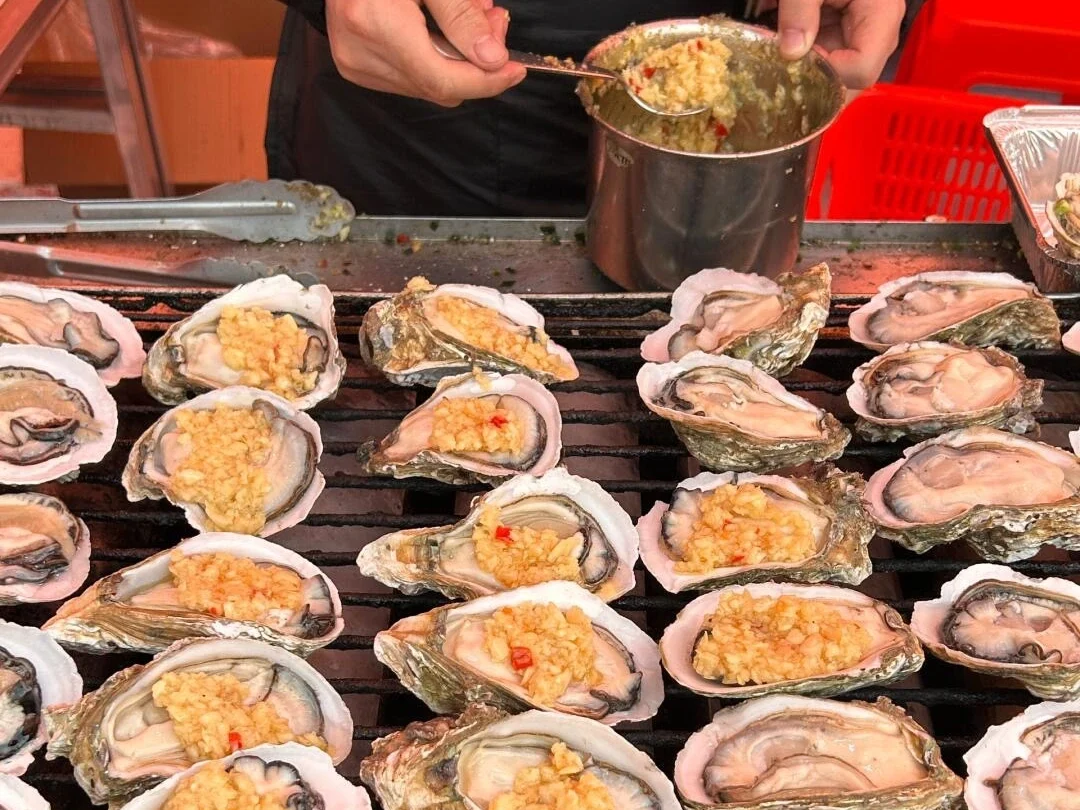
Chengdu’s streets hide the joy of eating on the move. Start at Kuixinglou with a cream-and-meat-floss egg pancake, turn a corner into a cold pot skewer shop, then follow the thud of a san da pao vendor pounding glutinous rice. In the alleys of Wenmiao, sweet-and-sour ribs from Fu Qiang tempt your taste buds, while your hands juggle baked pork knuckle, icy jelly, and crispy flatbread. From street’s start to alley’s end, the city feeds both appetite and curiosity, one delicious step at a time.
Avoiding Tourist Traps & Practical Tips
- Skip Overpriced Scenic Snacks – Street treats like candied rice balls or san da pao in Kuanzhai Alley and Jinli can cost 30%+ more than in local neighborhoods. Try them once, then head to nearby Kuixinglou Street for authentic, fairly priced meals.
- Time Your Visit to Viral Spots – At popular places like Mao Jiao Huo La or Chengdu Chi Ke, queues are shortest on weekdays between 3–5 PM or after 9 PM. On weekends, waits can exceed two hours; branch locations like Jiuyanqiao are often less crowded.
- Beware of “Fake Local Products” – Many “specialty supermarkets” sell mass-produced hotpot bases. For quality, shop at local chains like Hongqi Liansuo or buy freshly made bases directly from reputable hotpot restaurants.
- Know Your Spice Level – Locals default to “medium spicy.” If you’re new to Sichuan heat, start with “mild” (still quite spicy). For dishes like mapo tofu, going spice-free may ruin the flavor—opt for non-spicy alternatives instead.
- Hotpot Cooking Rules – For best texture: tripe & duck intestine 8 s, pork aorta 10 s, pork brain & duck blood over 10 min. Finish by boiling instant noodles in the broth with a splash of vinegar to cut the richness.
- Hidden Pairings to Try – Sandwich cold noodles or intestines in crispy guokui flatbread for a filling, spice-balancing bite. Huangtianba’s Wang Ji Guokui is a local favorite.
- Eat Off-Peak for Comfort – Breakfast (7–9 AM) is prime for fresh guokui or intestine noodles. Hotpot & skewers are best at 5–6 PM or after 10 PM for richer broth and no wait. Visit Heming Teahouse 7–8 AM to snag bamboo chairs and morning light.
- Seasonal Must-Eats – Spring: green peppercorn hotpot, Chinese toon with tofu. Summer: yellow jelly, ice jelly with barbecue. Autumn: rabbit dishes at their peak, from spicy cold rabbit to braised rabbit heads.