 admin
admin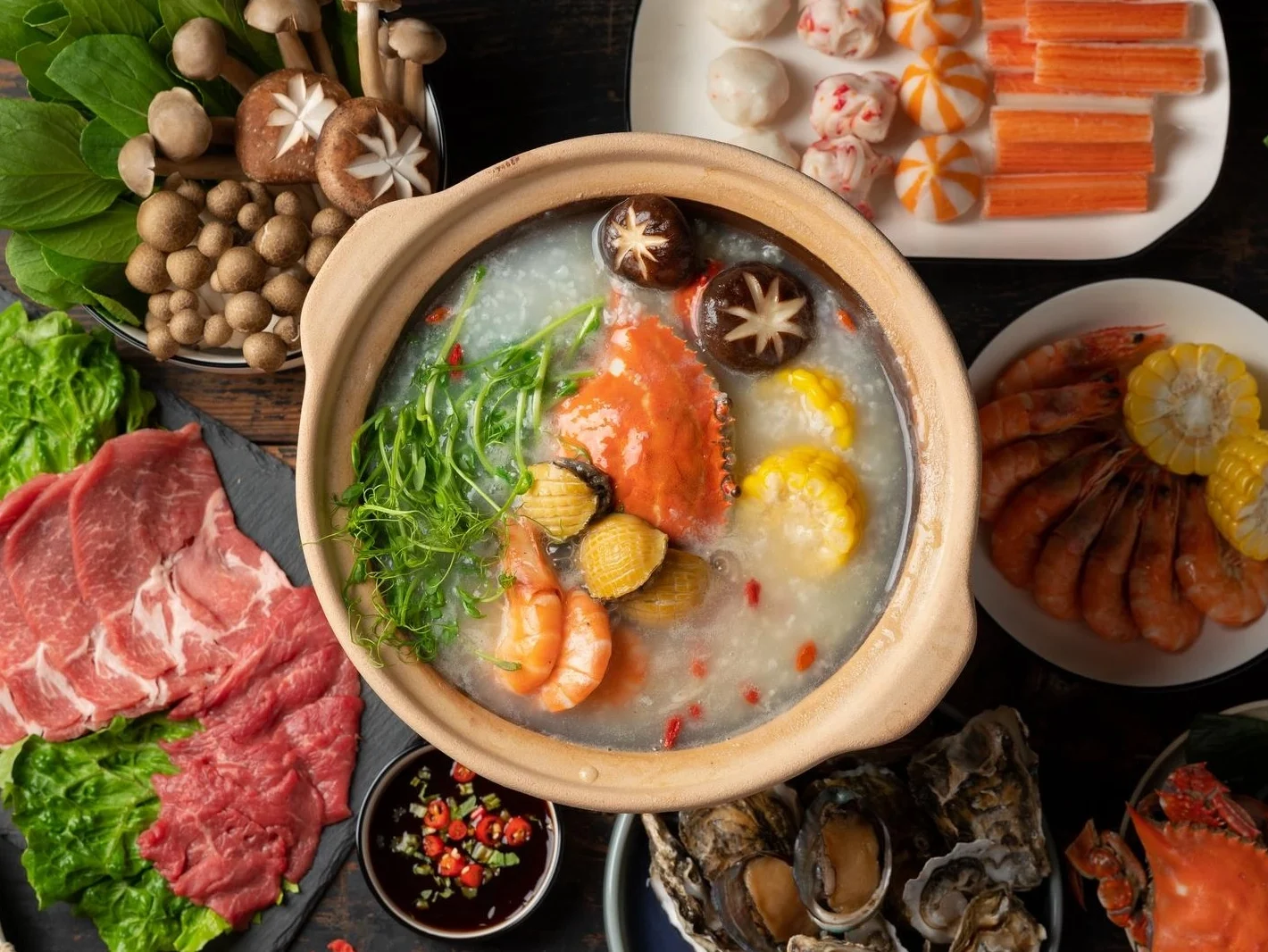
Discover essential hotpot tips, including safe ingredient combinations, proper cooking times, and the best practices to avoid foodborne risks and ensure a flavorful meal.
Hotpot, anciently called “Gudong Soup,” is one of China’s unique culinary traditions.
It derives its name from the bubbling sound made when ingredients are added to boiling water.
This cooking method is suitable for all ages, symbolizing both a food preparation style and a cultural representation.
Hotpot typically involves using a pot to cook various foods in hot water or broth, with the distinctive feature of cooking and eating simultaneously.
It is especially popular in colder climates for its spicy, savory, and slightly oily taste, which is never greasy.
Nowadays, hotpot has evolved into the “Yuan Yang” pot, offering spicy and mild options to cater to different tastes, making it a perfect winter delicacy enjoyed by all.
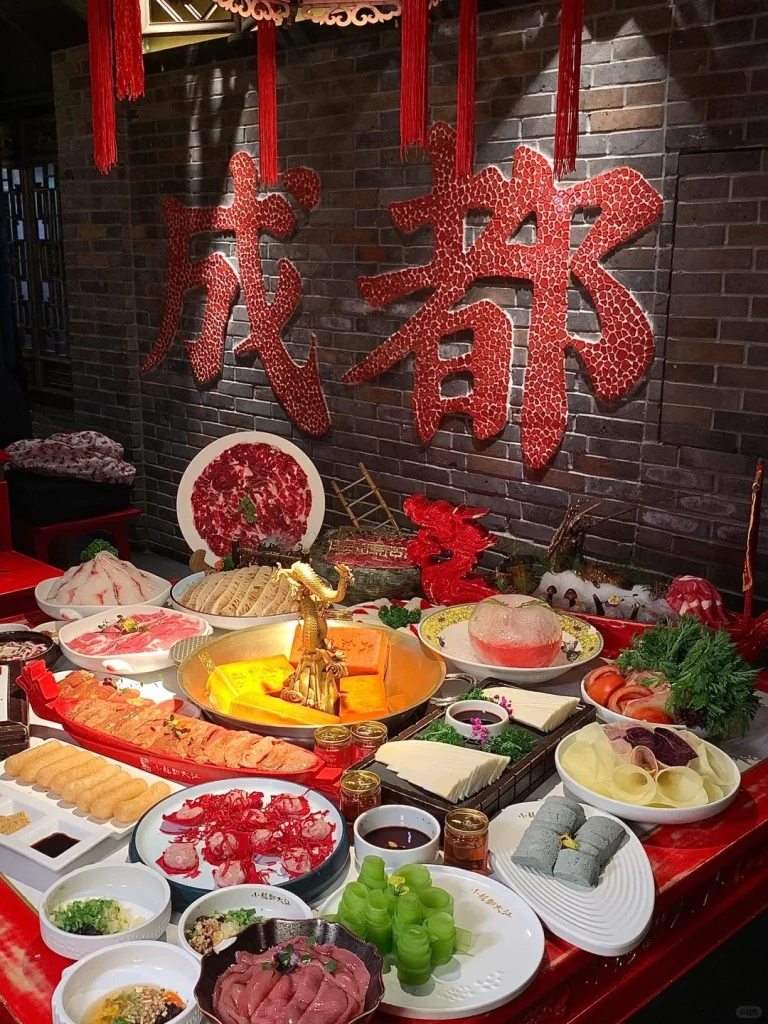
#1 Sichuan hotpot: a spicy and fragrant feast for the senses.
Originating from the late Ming and early Qing dynasties, it began as a simple method of cooking beef offal with ingredients like beef tallow, chili, and Sichuan pepper at the docks.
The hallmark of Sichuan hotpot is its clear oil base, made with rapeseed oil, creating a spicy and aromatic experience without being overly greasy.
The hotpot’s spice level is adjustable, offering mild, medium, and extra-spicy options to suit all tastes, even those not accustomed to spice.
A variety of ingredients, such as beef tripe, duck intestines, and shrimp balls, are added to the broth, with freshness and crispness emphasized.
Today, Sichuan hotpot is a cornerstone of Chinese culinary culture, with over 100,000 restaurants nationwide and billions in annual revenue.
It also symbolizes the social philosophy of “eating around the stove” in Sichuan culture.
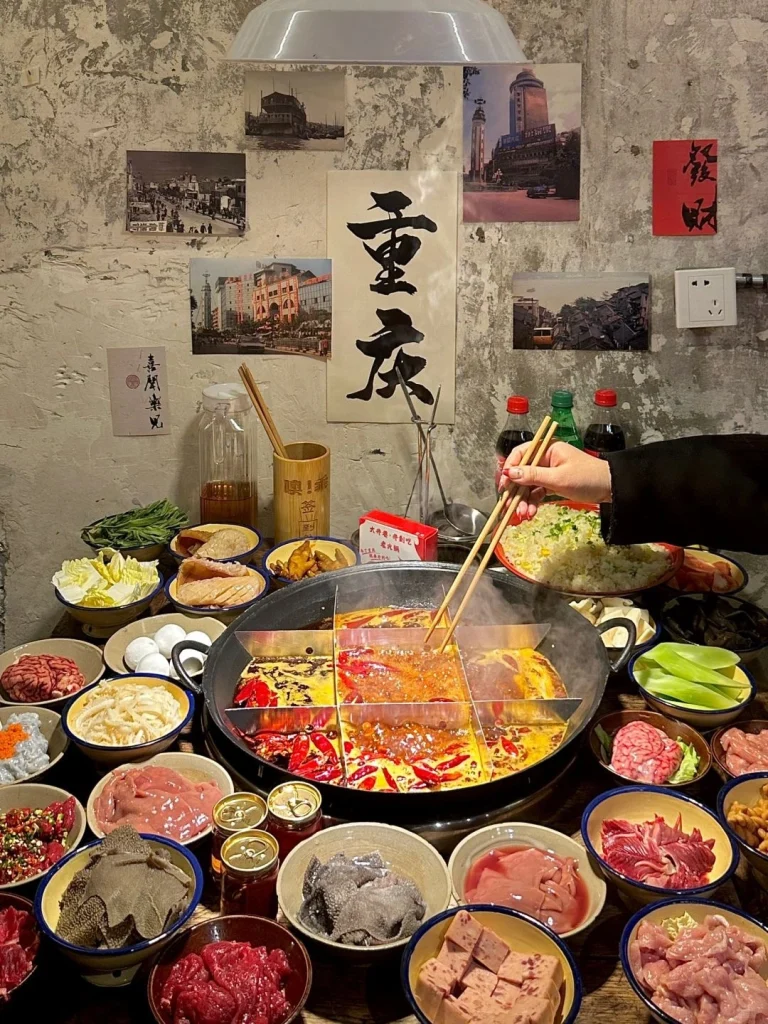
#2 Chongqing hotpot: the fiery passion of the nine-grid copper pot.
Chongqing people’s obsession with hotpot is reflected in three essential questions:
- What to eat on weekends? Hotpot!
- What to do after a breakup or promotion? Hotpot!
- What to order when feeling lazy? Hotpot delivery!
The core difference lies in the beef tallow base versus the nine-grid pot design.
The beef tallow base is rich and spicy, featuring Sichuan pepper and chili for a bold, intense flavor that gets spicier as it cooks.
The nine-grid design uses a copper pot divided into nine sections, with varying heat levels for different ingredients.
Rules dictate that each person only dips ingredients in their designated section.
Chongqing hotpot is a cultural symbol, with over 80,000 restaurants globally and a key player in diplomacy, having hosted international dignitaries.
The ultimate expression of Chongqing’s fiery culinary spirit is found in the sizzling, flavorful experience of its hotpot.
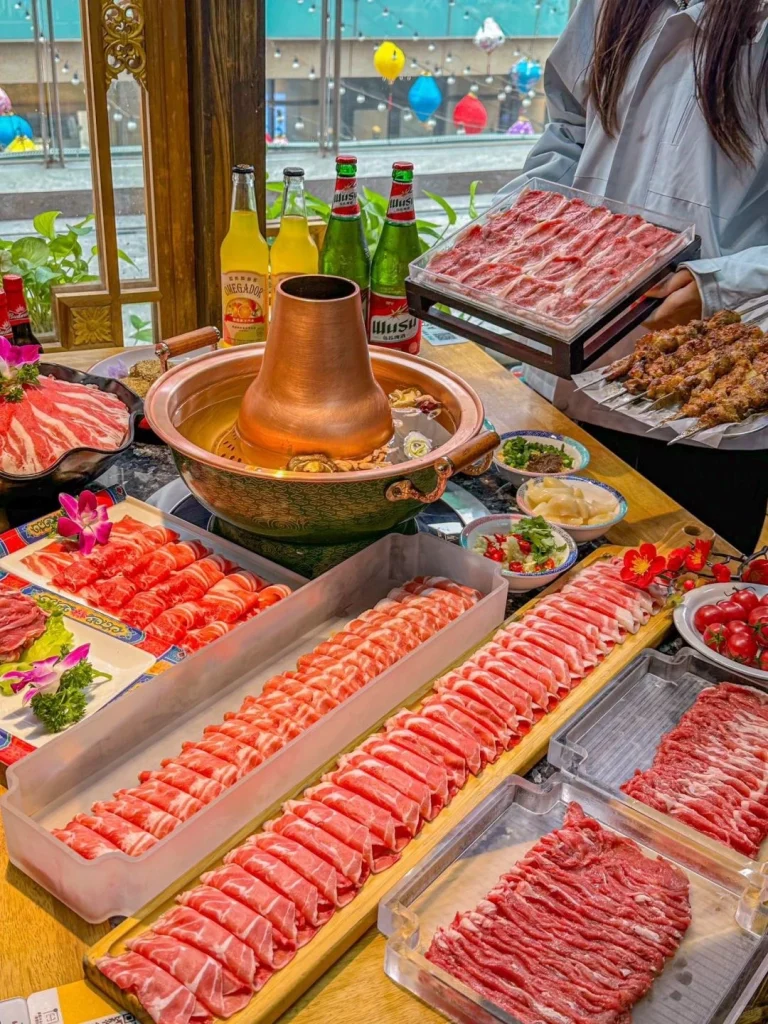
#3 Beijing Copper Pot Hotpot: The soul of old Beijing in a charcoal-copper pot.
Beijingers say, “If you don’t use a copper pot bowl during the Winter Solstice, no one will care if your ears freeze.”
Copper pot hotpot is the ultimate weapon to ward off the cold in Beijing, bringing warmth and charm to the hutongs.
The core features include the purple copper pot and charcoal fire. The pot evenly distributes heat while charcoal preserves the tenderness of meat.
The “chimney” in the center symbolizes warmth and prosperity.
The meat is freshly hand-sliced, thin as gossamer, and cooked in just 10 seconds for a tender, milk-scented taste.
Avoid frozen meat rolls; only hand-sliced meat is authentic. The dipping sauce combines sesame paste, peanut, fermented tofu, and shrimp oil for a delightful taste.
This traditional dish represents Beijing’s culinary culture, mixing history, warmth, and mouthwatering flavors to turn winter into a feast for the senses.
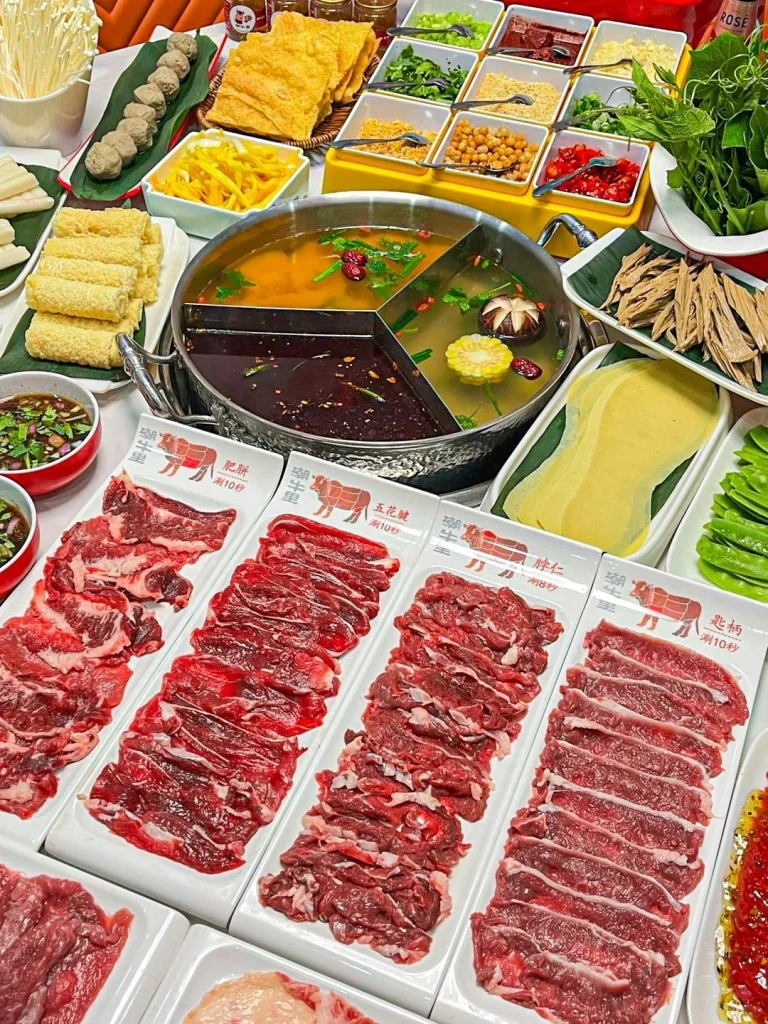
#4 Chaozhou Beef Hotpot: The secret of freshness in clear broth.
Chaozhou people say, “Better to eat without meat than without soup.”
The Chaozhou beef hotpot is all about its clear broth made by simmering beef bones, brisket, corn, and radish for three hours, resulting in a milky white and clear broth that preserves the natural flavors of the ingredients.
The core features include extreme precision in meat cuts. Only 30% of the cow is used for hotpot, with cuts like “吊龙” (sirloin), “五花趾” (beef tendon), and “匙仁” (shoulder meat).
The fresh meat is hand-sliced so thin that each piece is no thicker than 0.3 cm and cooked in just 8 seconds to lock in the juices.
Handmade beef balls are another highlight, made from minced beef and shaped into bouncy balls that can jump 20 cm high when boiled.
This traditional dish is widely loved and brings Chaozhou’s unique culture and freshness to every bite.
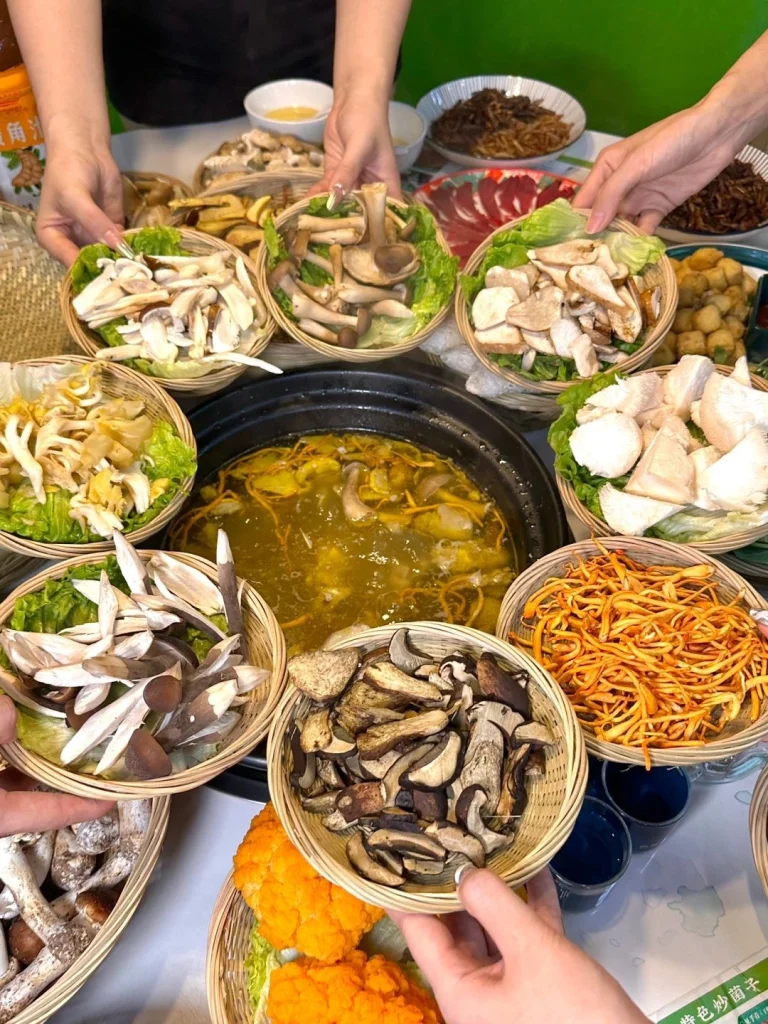
#5 Yunnan Mushroom Hotpot: A forest feast on the tip of your tongue.
Yunnan people say, “Eating mushrooms is a conversation with the forest.”
Known as the kingdom of wild mushrooms, Yunnan produces over 250 edible varieties during the rainy season (June to September), making mushroom hotpot a celebrated “mountain delicacy.”
The key elements of this hotpot are the wild mushrooms, including “鸡枞” (crispy and sweet), “松茸” (buttery aroma), “牛肝菌” (thick and juicy), and “竹荪” (crisp and soup-absorbing).
The broth is made from mountain spring water, old hens, and ham, allowing the mushrooms to release glutamate and create a natural “umami soup.”
The hotpot experience involves a layered approach, starting with tougher mushrooms, followed by tender ones, and finishing with a delicate absorption of flavors.
With its cultural significance, the Yunnan mushroom hotpot is a natural feast that’s as much about tradition as it is about flavor.
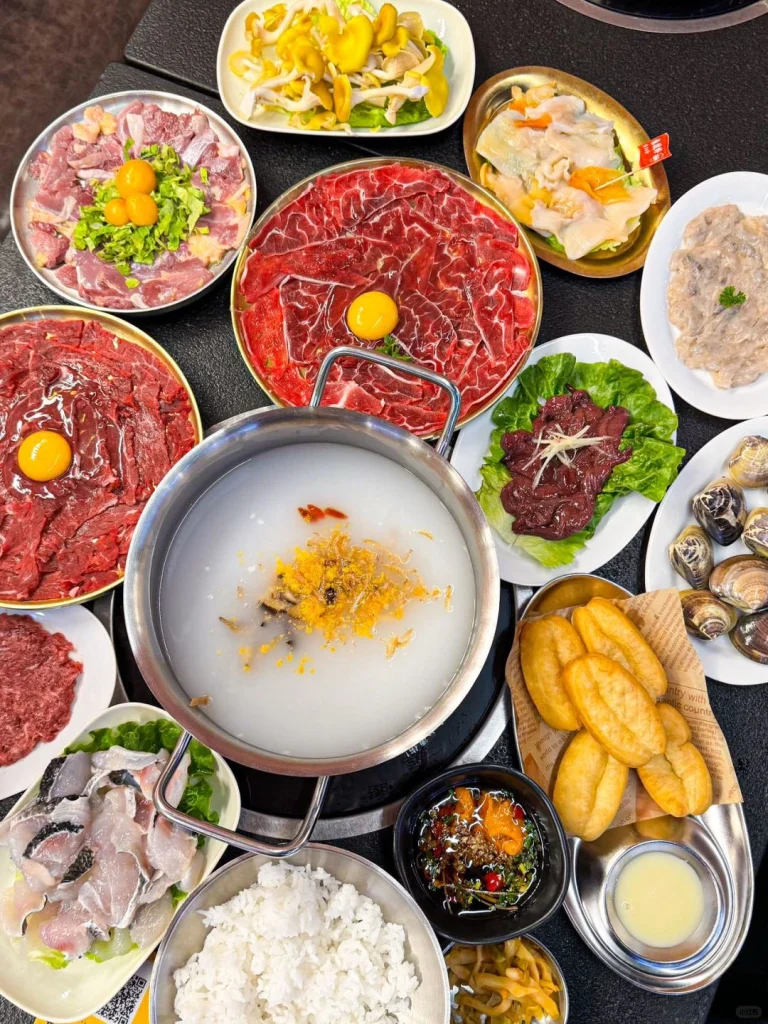
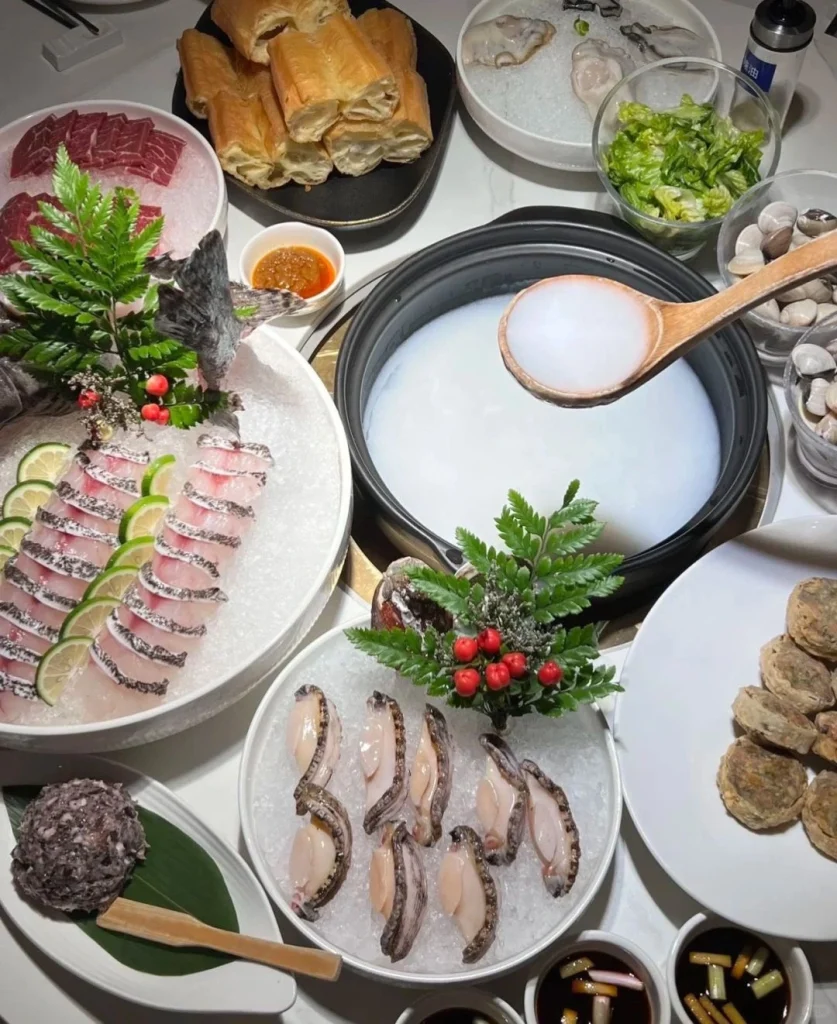
#6 Guangdong Shunde Congee Hotpot: The health philosophy in rice oil.
Shunde people say, “Congee nourishes the body, while congee-based hotpot nourishes the soul.”
Originating in the Qing Dynasty, this hotpot replaces the traditional broth with congee, using the wisdom of “rice oil locks in freshness” to blend health benefits and deliciousness.
The core of this hotpot lies in the golden ratio of Northeast rice and silk rice, which is soaked and cooked to extract rice oil, creating a smooth, rich congee base.
The order of ingredients is key: first seafood (oysters, shrimp), followed by meat (beef, fish), then fish balls for bounce, and finally vegetables (watercress, lettuce) to finish.
The recommended dipping sauce is a mix of Shunde soy sauce, garlic, chili, and peanut oil, with a more advanced version using sand ginger and fermented tofu sauce for offal.
This culinary tradition has earned recognition as the “Eastern health hotpot model” by UNESCO.
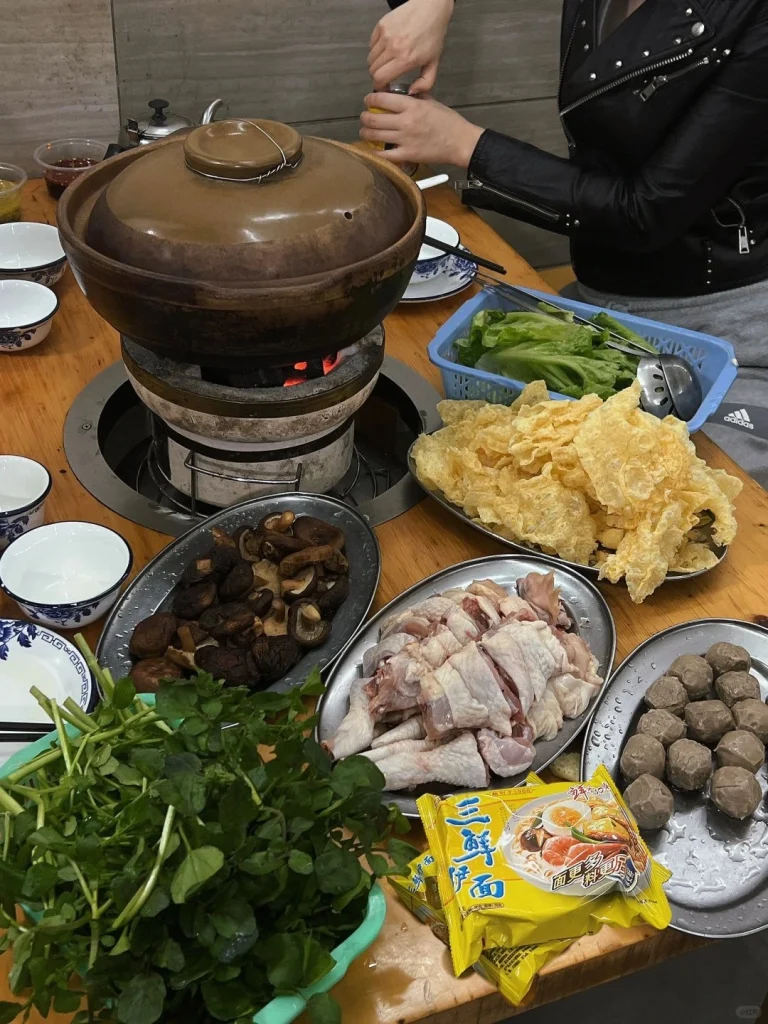
#7 Guangdong & Guangxi Hotpot: The warm memories of eating around the stove.
The name “Da Bian Lu” originally came from “Da Biao Lu,” a small ceramic stove.
It dates back to the Southern Song Dynasty and flourished in the Pearl River Basin during the Ming and Qing Dynasties.
Initially, people would stand around the stove, dipping food into the broth with long chopsticks.
In Cantonese, “Da” means to gather, and this unique scene led to the name we know today.
The secret to the hotpot lies in the broth.
Classic styles include herbal chicken soup, seafood broth, and congee-based broth, with each slowly simmered for hours to bring out natural flavors without adding MSG.
Fresh ingredients are key, including seafood, thinly sliced meats like beef, and special handmade meatballs.
The hotpot experience is completed with dips like peanut and soy sauce, and the culture of sitting around the stove reflects Guangdong‘s warmth and hospitality.
This tradition has evolved from street-side quick meals to a warm, family-oriented dining experience.
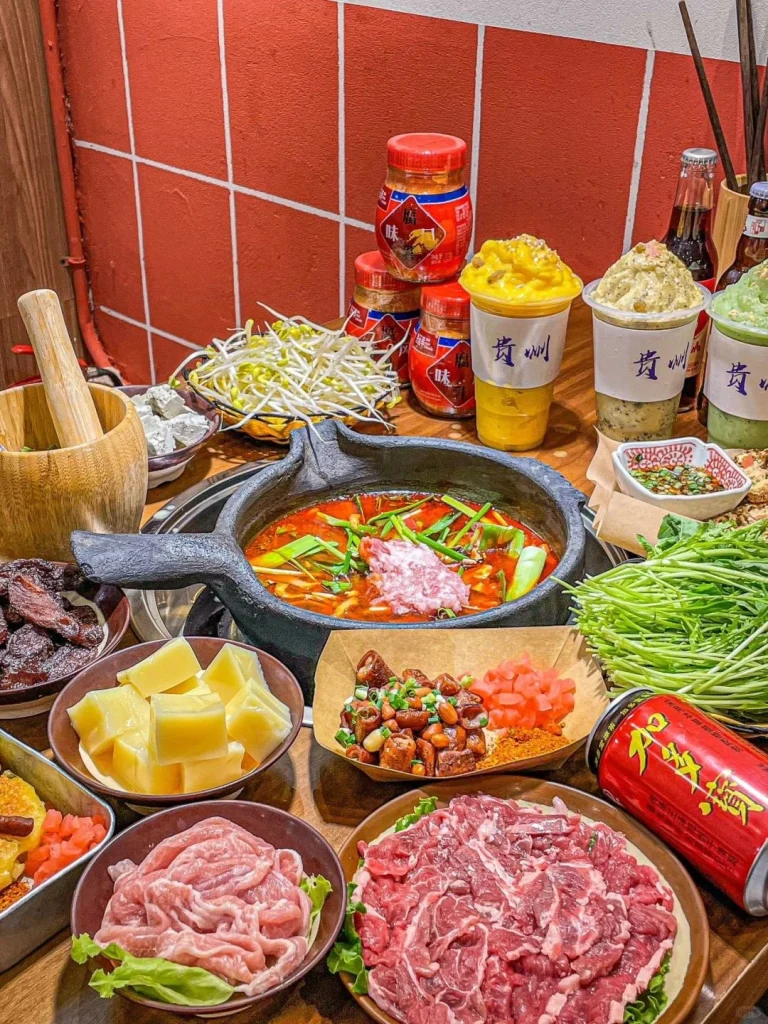
#8 Guizhou Sour Soup Hotpot: The Miao code in a spicy, sour world.
Guizhou people have a hardcore health practice: drinking sour soup!
The “health assassin” of the hotpot world is sour fish hotpot.
The thing that makes Guizhou people weak after three days without it? Sour soup!
The core of this hotpot lies in the fermentation of the red sour soup, created with wild tomatoes, glutinous rice wine, and chili peppers, fermented for three months.
It is bright red with a fruity tang.
White sour soup, made from fermented rice water, offers a mild, sweet-sour flavor.
The fish used in this hotpot is fresh and firm, with rice field-raised fish being the best choice.
The three-stage hotpot ritual involves sipping the soup, dipping fish in chili oil, and finally boiling vegetables to soak up the flavors.
Recognized as an intangible cultural heritage, Guizhou sour soup hotpot carries Miao culture and social warmth in every bite.
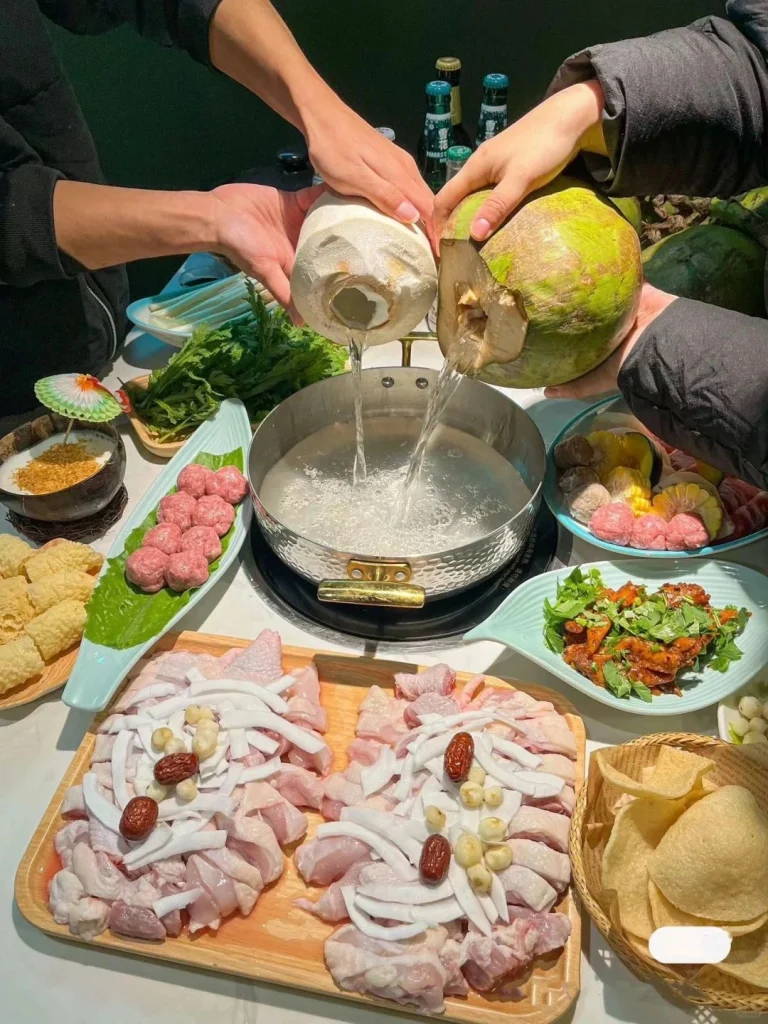
#9 Hainan Coconut Chicken Hotpot: A sweet feast in the breeze of coconut trees.
Hainan Coconut Chicken Hotpot, known as the “tropical rainforest on the tongue,” is made with fresh coconut water as the base and the tender Wenchang chicken.
It perfectly blends tropical flavors with a healthy philosophy.
The soup is made by simmering coconut meat, coconut water, and a small amount of mineral water, forming a rich yet light coconut aroma.
The key ingredient, Wenchang chicken, is simmered for only three minutes in the broth, resulting in tender, flavorful meat.
The hotpot also includes various fresh vegetables and mushrooms, such as bamboo fungus and water chestnuts, which absorb the rich coconut flavor.
The cooking process is simple, relying solely on fresh ingredients, ensuring a pure and natural taste.
This dish is more than just a meal; it reflects the local wisdom of Hainan, offering a healthy and refreshing culinary experience.
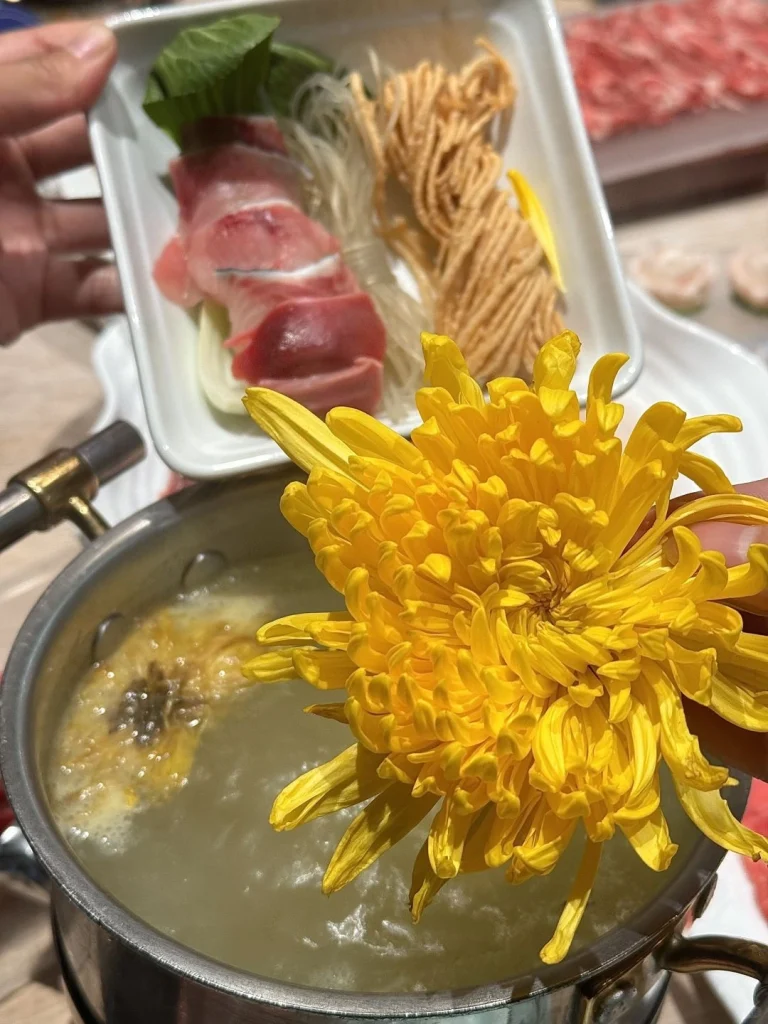
#10 Jiangsu-Zhejiang Chrysanthemum Hotpot: A refined delicacy of poetic elegance.
Jiangsu–Zhejiang Chrysanthemum Hotpot originates from the Ming and Qing dynasties, symbolizing the harmony of chrysanthemum fragrance and warmth.
The essence of the dish lies in the delicate chrysanthemum flowers, such as Hangbai Chrysanthemum, which are added to a rich broth made from chicken and bones, creating a golden, aromatic base.
Fresh seasonal ingredients like river fish, mushrooms, tofu, and vegetables complement the broth’s subtle flavor.
The traditional copper pot enhances the experience, symbolizing the art of “gathering around the stove.”
This hotpot embodies the wisdom of combining food and medicine, offering a balance of cooling and nourishing qualities.
Today, it’s a vibrant symbol of Jiangnan’s culinary culture, blending tradition and innovation, from chrysanthemum noodles to chrysanthemum ice cream.
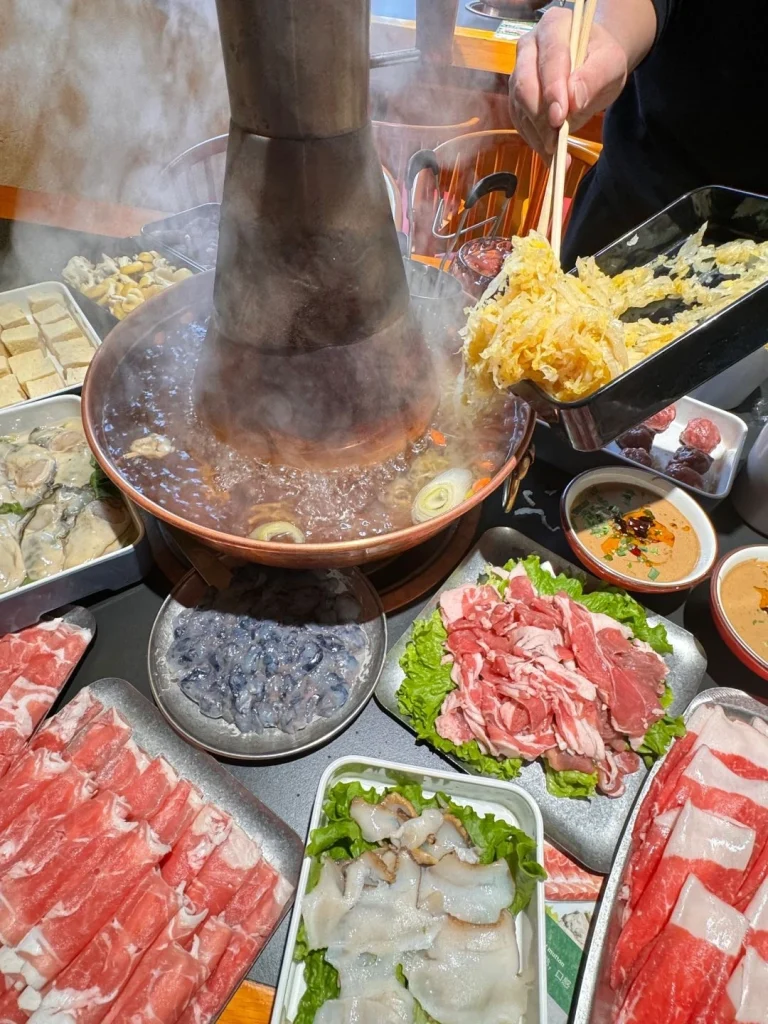
#11 Northeastern Sauerkraut and Pork Hotpot: A warm and hearty feast in the winter cold.
Northeastern Sauerkraut and Pork Hotpot is a traditional dish that is the perfect remedy for the cold, combining rich flavors and comforting warmth.
The base of the dish is sauerkraut, made from fall cabbage fermented with coarse salt, offering a distinct tangy flavor.
The star ingredients include white pork, cut into thin slices, and blood sausage, offering a unique taste appreciated by locals.
The hotpot is enriched with additional ingredients like tofu, vermicelli, and dried shrimp, all simmered together for an unforgettable flavor.
The use of copper pots and charcoal enhances the cooking process, imparting a distinct aroma to the dish.
This hotpot is not just a meal; it represents the hospitality and hearty nature of the northeastern people, bringing families together in the cold winter months.
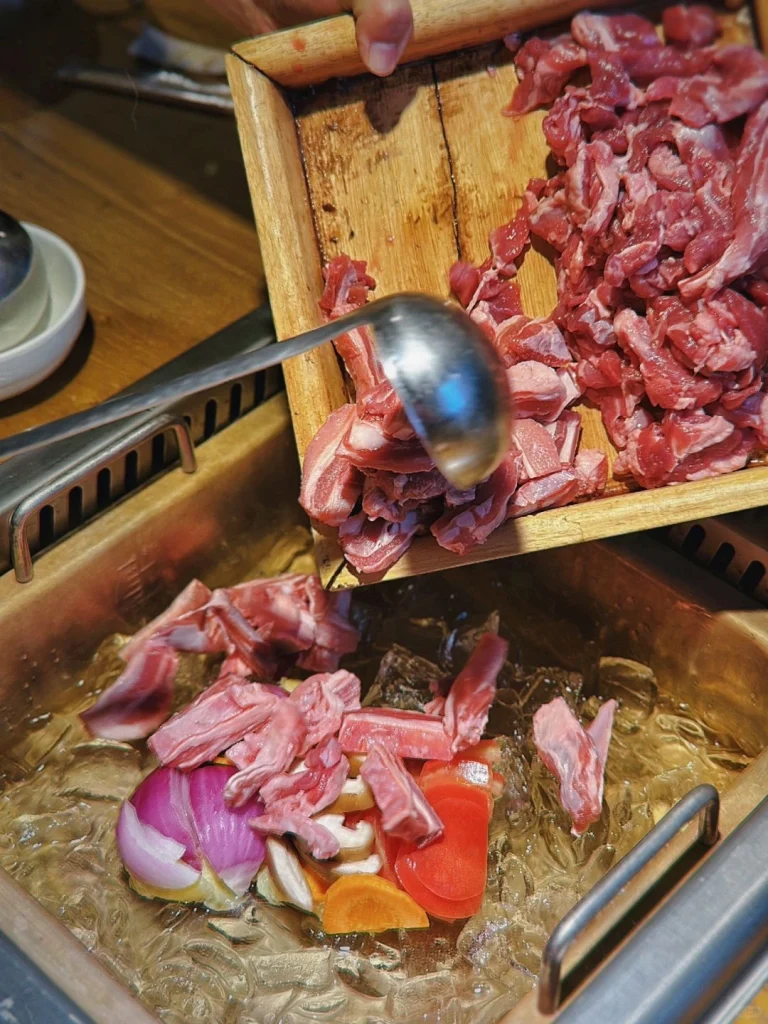
#12 Inner Mongolia Ice Boiled Lamb Hotpot: A flavorful symphony of ice and snow.
This hotpot, combining the wisdom of nomadic culture with extreme cold climates, uses ice blocks to lock in the tender lamb, creating a unique contrast of “ice and fire” flavors.
The lamb is carefully selected from high-quality breeds like the Sunit and Ujumqin, offering tender, flavorful meat.
The broth is made from glacial meltwater and the lamb’s natural juices, while wild plants like sand onions enhance the aroma.
The cooking method involves layering ice blocks and lamb in a copper pot, simmering over a charcoal fire, letting the ice melt and infuse the meat with its natural flavors.
This traditional technique is part of the nomadic people’s heritage, with the hotpot often served at seasonal festivals, symbolizing warmth and togetherness.
The Origin of Hotpot
The origin of hotpot is debated with two main theories.
One suggests it dates back to the Warring States period, using clay pots.
Another theory traces its origin to the Han Dynasty, where “dou” referred to the hotpot.
Artifacts of hotpots were found in the Western Han Dynasty’s Haihunhou Tomb, indicating its presence over 2000 years ago.
The “Wei Shu” records that during the Three Kingdoms period, hotpots made of copper were used to cook meats like pork, beef, lamb, chicken, and fish, though they weren’t popular.
Hotpot became more common in the Song Dynasty, and by the Yuan Dynasty, it spread to Mongolia.
By the Qing Dynasty, numerous regional varieties had emerged, and hotpot even became a famous imperial dish.
Hotpot eventually reached Japan in 1338 during the Muromachi period and is now enjoyed globally.
The Development of Hotpot
Hotpot has become a beloved dish for many due to its convenience and adaptability, particularly in the northern regions where the cold and dry weather make it especially appealing.
The Three Kingdoms and the Birth of the Dual Pot
Hotpot’s development mirrors the evolution of culinary history, adjusting based on available utensils, societal needs, and ingredient discoveries.
During the Three Kingdoms period, the “Five Cooking Pots” mentioned by Wei Wen Di were precursors to the “Yuan Yang Pot” of today, capable of cooking multiple foods at once.
The Snowy Winter and the Birth of Hotpot’s Name
The most poetic description of hotpot comes from the Southern Song Dynasty, where Lin Hong’s “Shan Jia Qing Gong” depicted the preparation of rabbit meat hotpot during a snowy visit to Wuyi Mountain.
Minimal Changes to Utensils, Steel Pots Dominate
While the utensils used for hotpot have evolved minimally, the most common pots today are made of stainless steel.
Fuel for Fire: The Rapid Evolution
The evolution of fuel sources has been much more dramatic, from firewood and charcoal to electric stoves and induction cookers.
The Evolution of Dipping Sauces
Despite changes in the fuel and pot materials, dipping sauces have remained relatively traditional, with signature recipes like Shantou’s Sha Tou sauce still reigning supreme.
Three Main Types of Hotpot
Hotpot is generally divided into three main categories: light broths for dipping raw slices, cooked ingredients with a warming broth, and fully cooked dishes, where the fire is used only for warmt
Hotpot Culture
Hotpot is not only a delicious dish but also a deep reflection of food culture, adding a unique charm to dining.
During a hotpot meal, people of all ages gather around a steaming pot, sharing food and conversations, creating a warm and harmonious atmosphere, perfect for family reunions, a tradition in Chinese culture.
In Northeast China, when hosting guests, the arrangement of ingredients in the pot follows specific rules: poultry in the front, meat from wild animals at the back, fish on the left, shrimp on the right, and vegetables sprinkled around like stars around the moon to show respect.
In Chongqing, the “capital of hotpot,” people enjoy basic ingredients like garlic, ginger, and sesame oil, and a particular method of cooking to preserve the authentic flavor, often with beer or liquor to complement the spicy nature of the region.
China travel guides
In Taiwan, hotpot is enjoyed on the seventh day of the Lunar New Year, with seven key ingredients symbolizing wealth and happiness.
Different Ways to Enjoy Hotpot
1. Blanching in the Broth
Blanching is when ingredients are quickly immersed in boiling broth.
Delicate ingredients like duck intestines, liver slices, pea shoots, and spinach should be blanched quickly, while thicker items like beef tripe, mushrooms, and beef slices need longer.
The broth should be boiling, with enough fat to keep the heat steady.
It’s essential to control the timing—overcooking will toughen the food, while undercooking leaves it raw.
2. Boiling
Boiling involves placing ingredients like fish, meatballs, or mushrooms into the pot and cooking them until done.
These ingredients, with a denser texture, require longer cooking times to reach the proper consistency.
3. Meat First, Vegetables Later
It’s recommended to cook meat first, followed by vegetables.
Ensure the broth is boiling, fully submerging the ingredients.
If you enjoy spicy food, cook near the oil spots for a more intense flavor.
Also, it’s best to have a cup of tea to aid digestion, cleanse the palate, and balance the spicy flavors.
4. Adding Traditional Chinese Herbs
You can enhance the hotpot with Chinese herbs like Dendrobium, Radix Scrophulariae, and Ophiopogon tuber.
Wrap the herbs in a cloth and let them simmer for 15-20 minutes before removing them.
This provides cooling benefits and reduces the “heat” from the hotpot.
5. Adding Vegetables and Tofu
Add vegetables like spinach, celery, and lettuce, as well as tofu products like pressed tofu or dried tofu sheets.
These help counteract the heat from the hotpot, offering cooling and detoxifying properties due to their high vitamin content and neutral nature.
6. Adding Beer to the Broth
Adding a small amount of beer to the broth can enrich the flavor, as beer contains nutrients that balance the hotpot’s richness and prevent excess heat buildup.
7. Eating Fruit After Hotpot
After enjoying hotpot, wait 20-30 minutes before eating cool fruits like pears, apples, or oranges.
These help counter the “heat” caused by the hotpot, though avoid citrus fruits like mandarins, as they may aggravate the issue.
Important Hotpot Eating Tips
1. Beef Liver
Beef liver should not be eaten with fish, especially bream.
It also shouldn’t be consumed with Vitamin C, blood-thinning medications, levodopa, oral hypoglycemic drugs, or phenelzine, as these can cause adverse reactions.
2. Lean Beef
Lean beef should not be eaten with chestnuts, snails, brown sugar, garlic chives, white wine, or pork.
These combinations can affect digestion and absorption of nutrients.
3. Toxoplasmosis Risk
Hotpot meat, especially lamb, pork, and beef, may carry toxoplasmosis.
This parasite is found in the muscles of infected animals, and the brief heat exposure from hotpot may not kill it.
Pregnant women should avoid consuming undercooked meat to prevent potential miscarriage or birth defects.
4. Seafood and Beer
When eating seafood hotpot, it is not recommended to drink beer.
Combining the two can lead to digestive discomfort and other adverse reactions.
5. Food Safety
While hotpot is delicious, it’s important to pay attention to food safety.
Ensure fresh ingredients are used to avoid food poisoning.
Control the cooking time to prevent nutrient loss or loss of flavor.
Avoid eating before the broth is boiling to reduce the risk of digestive issues.
Additionally, be cautious when handling hot broth to avoid burns to the mouth or esophagus.