 admin
admin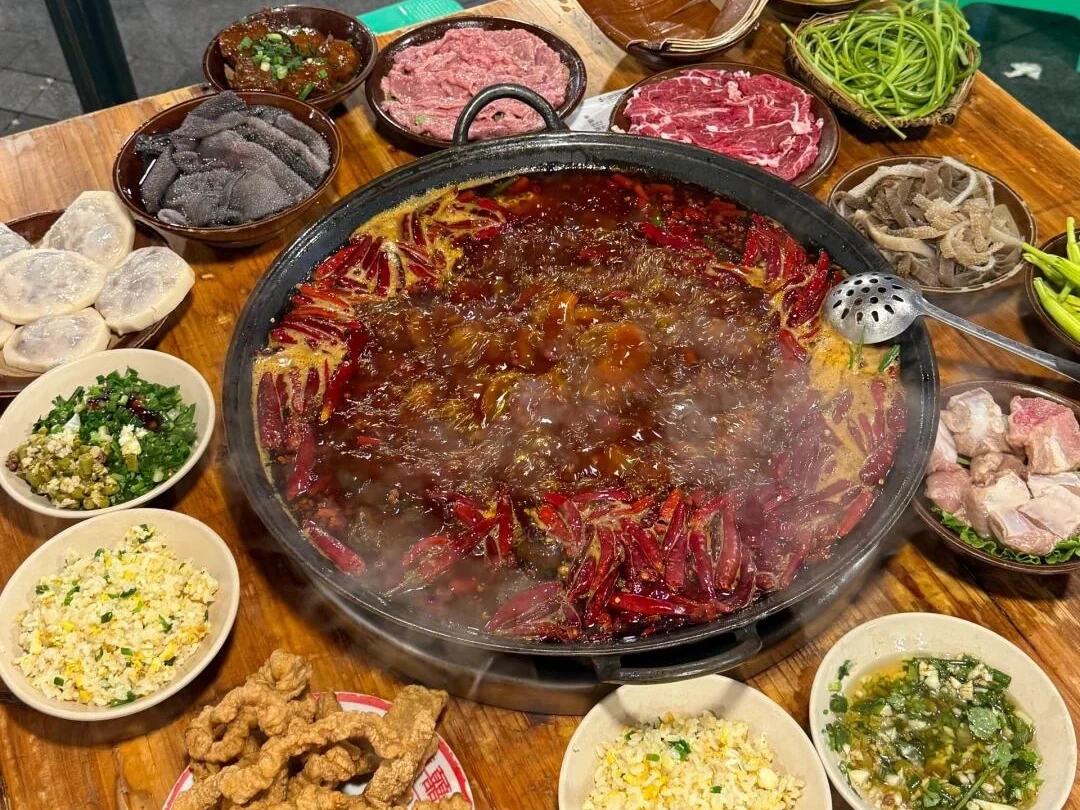
Savor Chongqing’s bold flavors with hotpot, noodles, street
snacks, and local delicacies, from bustling night markets to hidden alleyway eateries.
In Chongqing, the air is always scented with two aromas: the rich, fiery fragrance of beef tallow hotpot and the numbing burst of freshly cracked Sichuan peppercorns. Cradled between the Yangtze and Jialing Rivers, this mountain city has woven spice into the fabric of daily life—heat isn’t just seasoning here, it’s personality; numbness isn’t just a sensation, it’s a secret code. For those who live for spice, Chongqing isn’t just a city—it’s a utopia where the tongue tingles and the soul boils wit

Chongqing’s taste is born from its gritty dockside culture. A century ago, boat trackers and porters needed intense spice and numbing heat to chase away dampness and keep their spirits high. From the rolling boil of beef tallow hotpot to the sharp kick of morning xiao mian noodles and the unapologetic punch of jianghu dishes, the city’s flavors speak in a dialect of “mala”—numb, spicy, fragrant, savory, and piping hot. Hotpot here is a bubbling river of flavor, tripe and duck intestine dancing in red oil; xiao mian is the dawn’s wake-up call, red chili oil clinging to noodles with pickled vegetables and peanuts; and jianghu dishes come piled high, bold and unpretentious, served with nothing but the promise of taste.
Must-Try Foods List
Hotpot

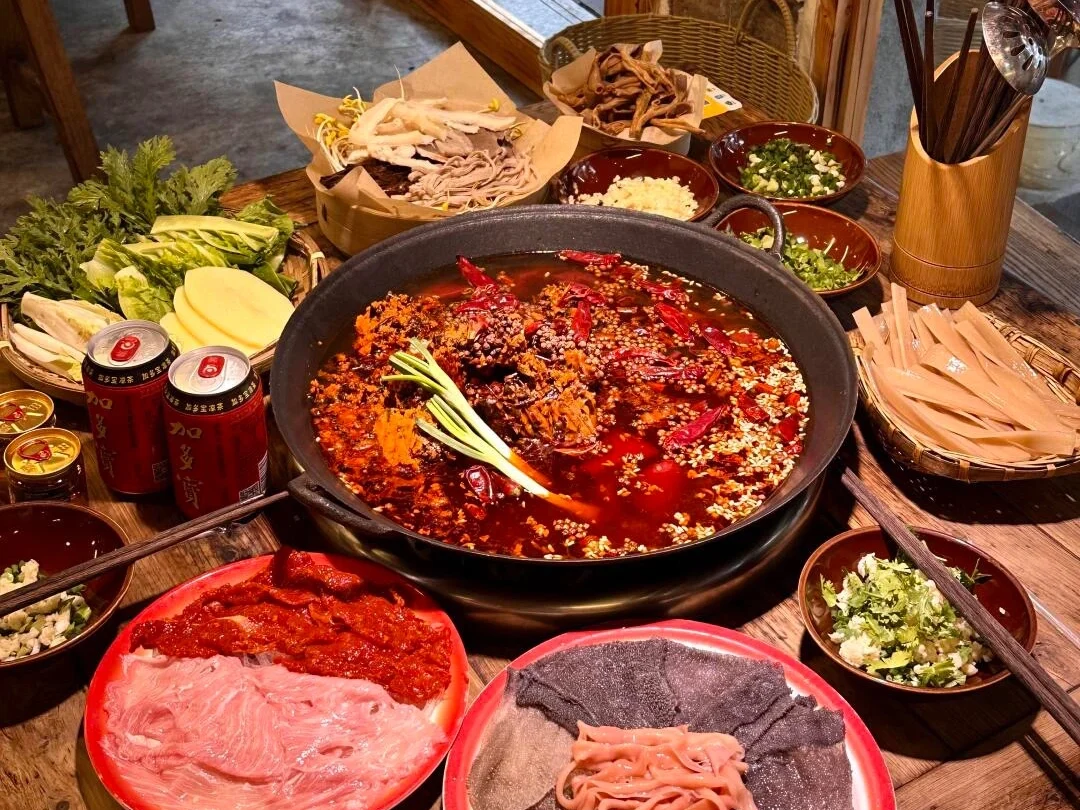
Chongqing’s iconic beef tallow hotpot demands a broth “red and glossy as lacquer.” Tripe, duck intestine, and pork aorta are cooked with the qishang baxia method—swift dips to keep them tender. Old-style hotpot houses like Da Long Yi and Pei Jie offer rich, traditional flavors, while hidden community spots deliver smoky, down-to-earth charm. Freshly fried crispy pork is a must, and icy glutinous rice balls are the perfect antidote to the heat.
Xiao Mian (Chongqing Noodles)

The city’s morning lifeline—alkaline noodles bathed in chili oil, Sichuan pepper, pickled mustard greens, and peanuts, topped with minced pork or beef. Its numbing-spicy aroma hits instantly. Favorites include Huashi wan za mian and wan za ladder noodles, where slow-cooked peas and pork blend into a silky, comforting sauce—an essential ritual for old Chongqing mornings.
Chuan Chuan Xiang (Skewers)

A street food favorite in two styles: cold skewers steeped in secret spicy broth, and hot skewers cooked table-side. Must-tries include beef slices, pork gizzards, and lotus root. Cold skewers are perfect for summer snacking, while hot skewers warm the soul in autumn and winter. Old-town spots in Jiu Jie and Jiao Chang Kou hide the most authentic, numbing-spicy flavors.
You Cha (Oil Tea)

A breakfast “secret weapon” of locals—thick rice paste drizzled with chili oil, topped with crispy fritters, crushed peanuts, and diced pickles. In Wulong, the blend takes on Gelao ethnic flair, with tea leaves simmered into the broth, enriched with egg ribbons and cured pork. The result is a fragrant, savory “wake-up soup” that sharpens the senses.
Gui Baozi (Ghost Buns)

A dark-hued street legend tucked behind Jiefangbei—these charred soup dumplings are dipped in freshly mixed chili oil. Bite in, and the burst of spicy broth mingles with rich meatiness in an explosion of flavor. Pair it with an iced bowl of sweet liang gao jelly for a perfect sweet-heat balance in true Sichuan-Chongqing style.
Lazi Ji (Chongqing Spicy Chicken)

A bold icon of Chongqing’s jianghu cuisine—free-range chicken chopped into bite-size pieces, marinated, and fried until crisp outside and juicy inside. Stir-fried over high heat with a 3:1 mix of erjingtiao and bird’s eye chilies, plus Sichuan pepper, garlic, and ginger, the chicken hides among a fiery red heap. Each bite delivers crunch, numbing heat, and deep aroma—best enjoyed with a shot of icy Jiangjin laobaigan for that sweat-inducing kick.
Mao Xue Wang (Spicy Offal Hotpot)

A one-pot tribute to Chongqing’s jianghu flavors. Silky fresh pig’s blood, crunchy tripe, pork aorta, luncheon meat, and eel slices simmer with bean sprouts in a bone broth enriched with aged beef tallow. The red oil gleams, fragrant with Sichuan pepper and garlic. Each mouthful is a rich, numbing-spicy medley—legend says it’s so good you’ll finish three bowls of rice without noticing.
Shui Zhu Yu (Boiled Spicy Fish)

Tender slices of grass carp, marinated and lightly coated in starch, are laid over softened soybean sprouts and celtuce in a bubbling douban-based broth. A final pour of smoking-hot oil ignites the aroma of dried chilies and Sichuan pepper. The fish melts in your mouth, while the vegetables soak up the spicy broth—extra fish roe adds a pop of briny richness.
Lazi Tianluo (Spicy River Snails)

A late-night favorite—river snails purged for days, snipped for easy eating, then wok-fried with a medley of dried chilies, Sichuan pepper, star anise, and cinnamon, splashed with beer to draw the flavor deep inside. Locals savor the spicy broth first, then pull the tender meat in one sip, licking the shells clean. In Jiu Jie’s night stalls, de-shelled stir-fried snail meat is a beer snack that keeps crowds until 2 a.m.
Suan La Fen (Hot & Sour Sweet Potato Noodles)

The essence lies in its nose-tingling sourness and fiery heat. Thick sweet potato noodles, soaked until supple then boiled to a chewy bite, are dressed with pickled long beans aged for months, crispy peanuts, fragrant red chili oil, and fresh vinegar. Each mouthful hits with sour first, then numbing spice, finishing with nutty crunch—at old spots near Jiefangbei, a spoon of rich meat sauce makes the broth irresistible.
Chao Shou (Chongqing Wontons)

Locally called bao mian, these have thick alkaline skins and generously seasoned pork filling. Red oil versions glisten with chili-infused rapeseed oil and Sichuan pepper, while original broth versions simmer in rich pork-chicken stock for six hours. In neighborhood stalls, a handful of dried shrimp is tossed in for extra umami, making every spoonful warming and fragrant.
Liang Gao / Bing Fen (Chilled Rice Cake & Jelly)

Chongqing’s cooling sweet duo. Liang gao is steamed from a mix of brown and glutinous rice, served cold with dark brown sugar syrup—smooth, pudding-like, and mellow-sweet. Bing fen, a hand-rubbed jelly, comes with hawthorn bits, raisins, sticky rice cakes, and sometimes fermented rice syrup for a tangy-sweet lift. After hotpot, one bowl sends icy freshness straight to your stomach.
Guoba Yangyu (Crispy Iron-Plate Potatoes)

Street-style comfort—yellow potatoes are steamed, peeled, and seared on an iron plate in fragrant rapeseed oil until golden and crisp outside, fluffy inside. Tossed with chili oil, pickled root herb (zhe er gen), fermented tofu brine, and a sprinkle of Sichuan pepper, they deliver a spicy, earthy, and savory punch. In Wanzhou’s old stalls, diced pickled radish adds extra tang.
Yundou Gao (Iron-Mold Rice Cake)

A Jiangjin specialty baked over charcoal in cast-iron molds greased with pork fat. Fermented rice batter flavored with brown sugar and osmanthus blossoms puffs into a crisp-edged, soft-centered cake with a subtle floral sweetness. Some masters add a dash of fermented rice wine for gentle aroma—best enjoyed hot with a sip of laoying tea.
San Jiao Ba (Triangular Rice Cake)

A nostalgic breakfast bite—fermented rice batter is poured into triangular iron molds and grilled over charcoal until crisp outside and sticky-soft inside. Sweet with a gentle tang, it’s sometimes dotted with raisins for a surprise burst. At old stalls in Lianglukou, eating one while sitting on stone steps is a morning ritual.
Where to Eat in Chongqing
Yuzhong District – The Flavors of Old Chongqing
Jiefangbei / Jiaochangkou

At Hao You Lai on Bayilu Food Street, sweet potato noodles soak up chili oil, with pickled beans and peanuts bursting in each bite. Qiu’er’s chicken-broth wontons simmer in copper pots until golden, a recipe passed down since 1949. Come evening, Jiaochangkou Night Market offers crispy guoba yangyu and foil-wrapped grilled pork brains rich with scallion-chili aroma.
Hongyadong / Chaotianmen

Zhiyan River Pier Hotpot serves riverside views with beef-tallow broth spiced by Guizhou chilies—tripe stays crisp with a quick dip. The new Shibati branch pairs sunset dining with peach cream drinks for an ice-and-fire contrast. At Chaotianmen, humble tofu pudding rice, silky and chili-kissed, turns a 3 RMB bowl into pure comfort food.
Lianglukou / E’ling

Huashi wan za mian (pea and pork noodles) is a legend—peas boiled to softness, fragrant minced pork sauce, and every noodle coated in red oil. Hidden in residential alleys, old-style “community hotpot” uses pure beef tallow, chilies, and Sichuan pepper, slicing tripe, artery, and blood curd to order. Come dusk, the alley air is thick with the perfume of simmering chili oil.
Shapingba District – Student Energy Meets Street Flavor
Ciqikou Ancient Town

Beyond the tourist main street, back alleys preserve the old-town taste: golden, crisp chen mahua (fried twists) in sweet or spicy styles; Maozhuang’s stir-fried chicken offal with pickled radish and chilies; and fiery mao xue wang with silky duck blood and crunchy tripe, where even the bean sprouts soak up the spicy broth.
Sanxia Square

Around Chongqing University and Nankai High School, street food is a student lifeline: Xu Liang’s roasted pork trotters are first braised, then grilled to a crisp, dusted with cumin and chili; Hu Ji’s pork trotter soup, simmered for hours until milky white, melts in the mouth and comes with peas and a chili-oil dip—so good that even celebrities have stopped by.
Jiulongpo District – The Home of Jianghu Cuisine
Yangjiaping / Xiejiawan

At Yangji Longfu, la zi ji (chili chicken) arrives as a mountain of red peppers hiding tender, juicy cubes of meat, numbing spice shooting straight to your head. At Da Long Yi Hotpot, beef-tallow broth grows richer as it boils, fresh duck blood quivering in the ladle; locals order house-fried crispy pork to dip in dry spice mix. Community eateries near MixC Mall offer surprises like spicy stir-fried river snails and braised eel with beer.
Shiqiaopu

A nameless noodle stall here is Chongqing’s hidden gem—opening at 5 a.m., serving springy alkaline noodles in vivid red-oil broth with pork mince and a fried egg. The owner refuses “mild” spice requests, yet regulars happily queue with their own bowls.
Jiangbei & Nan’an Districts – Trend Meets Tradition
Guanyinqiao / Jiu Jie

At Yuan Ji Chuan Chuan, skewers soak in bubbling red broth well past midnight—beef, liver, and lotus root among the must-tries. Guanyinqiao’s roasted sweet potato starch sheets (kao qiao pi) bubble on the grill, then wrap pickled radish and long beans, dusted with scallions and chili powder for an oily, satisfying bite.
Nanbin Road / Danzishi

On Nanshan’s spring chicken street, Lao Yao’s chicken is slaughtered to order, simmered in mountain-spring water, and served with glossy red chili oil and peppercorn aroma, while konjac pieces absorb every drop of broth. In Danzishi Old Street, yundou gao (iron-mold rice cake) bakes over charcoal until crisp-edged and soft-centered, scented with brown sugar and osmanthus, perfect with a cup of laoying tea.
Top-Rated Local Restaurant Picks
Pei Jie Old Hotpot (Jiefangbei Flagship)

- Address: 1st Floor, No. 5 Minsheng Road, Yuzhong District (opposite Shancheng Lamb Restaurant, near Jiefangbei Night Market)
- Average Spend: ¥90–120 per person
A “queue legend” on Chongqing’s must-eat lists, Pei Jie simmers a glossy beef-tallow broth with Guizhou bullet chilies and Mao Wen peppercorns that never turns bitter. Don’t miss the slaughter-fresh tripe—seven quick dips keep it crisp—or the handmade gongcai meatballs. For extra atmosphere, try the converted-air-raid-shelter branch and finish with a bowl of icy jelly.
Yuzong Laozao Hotpot (Jiefangbei)

- Address: No. 242 Minsheng Road, Yuzhong District (near Jiefangbei Night Market, about 8 minutes’ walk to Jiefangbei)
- Average Spend: ¥80–100 per person
An old-school hotpot brand since 1989, Yuzong insists on a “five jin tallow to one jin spice” broth that’s fiery but smooth. The water-eight-cuts platter—tripe, heart, tongue, and more—comes pre-braised for instant dipping, while hulake beef liver is blanketed in charred chili for a smoky bite. The Jiaochangkou night-market branch adds open-air mountain-city views to the experience.
Dongting Hotpot (Air-Raid-Shelter Branch)

- Address: No. 157-1, Zhongshan 3rd Road, Yuzhong District (near Lianglukou Metro Station, inside an air-raid shelter)
- Average Spend: ¥70–90 per person
The city’s first air-raid-shelter hotpot stretches through dim tunnels lit by tungsten bulbs, with steam curling from copper pots. Thick-cut pork shoulder stays tender after long boiling, its fat infused with beef-tallow richness, while fresh duck blood sets pudding-soft in the cooling pot. Peak hours often mean over an hour’s wait, so plan ahead.
No. 66 Jianghu Cuisine (Shapingba)

- Address: No. 66 Mafangwan, Shapingba District (next to Jinbi Street entrance, Ciqikou Ancient Town)
- Average Spend: ¥60–80 per person
Hidden in a Ciqikou alley, this jianghu-style stronghold delivers bold, peppery flavors at unbeatable value. Signature pepper chicken is wok-fried with Erjingtiao chilies and young ginger until crisp and numbing, while “First-Steam” layers ribs, pork belly, and intestines over sweet potatoes for a savory-sweet balance. Fast service makes the queue worth it.
Chunyang Old Tavern – Sichuan Cuisine (Qixinggang)

- Address: B2, No. 1 Chunyangdong, Qixinggang, Yuzhong District (Exit 2, Qixinggang Station, Metro Line 1, near Tongyuanmen City Wall)
- Average Spend: ¥70–90 per person
For over 30 years, this tavern has been the go-to for hearty drinking food with a jianghu edge. Ginger rabbit blends tender, boneless meat with layered spice and tang, while lard-fried crystal noodles with chives deliver pure comfort. The nine-grid platter offers a greatest-hits lineup of cold Sichuan bites, perfect with house plum wine.
Laolaifu – Sour Soup Rabbit (Moonlight City)

- Address: 2F–3F, Building 8, Moonlight City N37, No. 1218 Jinkai Avenue, Yubei District (near Yuanyang Metro Station, beside Yuanyang Interchange)
- Average Spend: ¥70–90 per person
Carrying on an intangible-heritage recipe, Laolaifu’s sour-soup rabbit simmers meat and sweet-potato noodles in seven-day-fermented broth for a bright, tangy heat. Dipping rabbit meat in the house chili sauce brings a sweet-spicy finish, while pickled-pepper rabbit tripe adds an addictive crunch. A top choice for friends who prefer a gentler spice.
Nie Facai Laifeng Fish (Jiefangbei)

- Address: No. 28 Datong Alley, 1–5, Yuzhong District (in the alley beside Marriott Hotel Jiefangbei, near Minsheng Road)
- Average Spend: ¥80–100 per person
A hidden gem in a residential block, Nie Facai specializes in paper-thin bighead carp slices swished in bubbling red broth for just three seconds. The result is tender, silky fish bursting with chili and peppercorn aroma. Order the dry-chili fried chicken for added fun, and finish with handmade noodles to soak up the broth.
Special Food Experiences – The Rituals of Mountain City Dining
Air-Raid-Shelter Hotpot – Steaming History in Stone Walls

Near Jiefangbei, these underground hotpot spots double as living museums. Push open the heavy wooden door, and cool, damp rock walls close around you under the amber glow of tungsten bulbs. Beef-tallow broth bubbles on cast-iron stoves, the scent of peppercorns curling into the air. Order slaughter-fresh tripe—seven quick swishes keep it crisp—and pair it with icy rice dumplings as voices echo through the tunnel, where the city’s heat and history blend in every mouthful.
Dockside Night Market – Spicy Feasts on the River Wind

At Chaotianmen Pier, the open-air night market is the city’s after-dark canteen. The scent of wok-fried crayfish drifts with the breeze, shells lacquered red with garlic-chili oil. Cold-spiced rabbit cubes bite back with dry heat, best eaten while sitting on a low stool by the water. Across the Jialing River, Hongya Cave’s lights shimmer like scattered gold, and toasts ring out over the lapping waves—half spice, half swagger.
Climbing for Flavor – Noodles at the Top of the Stairs

Hunting for food here often means training your legs. At Lianglukou, Ti Kan Noodles hides up 80 stone steps, the scent of red oil guiding you before you see the sign. Perch on the stairs, slurping pea-and-minced-pork noodles so rich they make the climb vanish from memory. In E’ling, a “residential hotpot” hides on the fifth floor of a walk-up, the beef-tallow aroma trailing down each landing until you push open the door to a room full of regulars and boiling copper pots.
Market Treasures – Eating with the Locals

Wanghai Flower Market’s food stalls are a trove for the hungry. Glossy spiced beef jerky hangs from hooks, with stall owners offering free bites that numb your lips and tempt your wallet. Pig ears, braised until gelatinous, glisten under the sun, while triangle rice cakes sizzle in iron molds, crisp outside and sweet within. Between haggles for chili peppers and chicken feet, you’ll leave with a bag of snacks and the city’s warmth in your step.
Food Pitfalls & Pro Tips – How to Eat Smart in Chongqing
1. Core Warnings
- Skip the Tourist Traps: On Ciqikou’s main street, many “Chen Mahua” stalls are knockoffs—look for Chen Changyin or Chen Jianping. In Hongyadong or Jiefangbei, hotpot prices can be 30% higher; walk 10 minutes into side streets to find nameless “residential hotpot” spots packed with locals for double the value.
- Beware of “Fake Spice”: Some trendy shops boost heat with chili extract, leaving you with heartburn. Choose places with old-style broths fried on-site, where you can see real chili and peppercorns. True beef-tallow broth gets richer the longer it cooks.
2. Spice & Ordering Tips
- Mind the Heat: Chongqing “mild” ≈ elsewhere’s “medium.” If you can’t handle spice, say mian la (no spice) and pair with icy jelly or soy milk to cool down. For real flavor, medium heat lets you taste peppercorn layers.
- Don’t Over-Order: Portions are big—two dishes and a soup feed two people. For hotpot, always get fresh tripe and duck blood processed the same day for the best texture.
3. Terrain & Transport Traps
- Don’t Trust Straight-Line Distances: “300 meters” could mean climbing 100 steps. Ask locals for directions—wang shang zou means uphill, wang xia suo means down. Landmarks like “stairs next to XX Bank” are more reliable than maps.
- Avoid Driving to Food Streets: Parking is scarce in places like Guanyinqiao, Jiu Street, and Jiefangbei Night Market. Use the metro—Lines 1 and 2 connect most major food areas.
4. Souvenir & Price Scams
- Hotpot Base Shopping: Skip “10 yuan for 3 packs” street deals—they’re often made with industrial tallow. Buy trusted brands (Qiaotou, Dezhuang) from major supermarkets, or take home fresh broth from your favorite hotpot shop (keep refrigerated).
- Watch the Scales: For night market crayfish or braised snacks, insist on weighing after peeling or draining, and watch for water-soaked bags adding weight. If shorted, report it—local authorities respond quickly.
5. Local Insider Moves
- Follow the Aunties: If the queue is mostly locals in slippers with shopping baskets, it’s worth waiting. If it’s all tourists filming, think twice.
- Xiaomian Code Words: For fried egg toppings, say “crispy edges.” For minced pork sauce, ask for “extra broth”—you’ll get more generous portions and a nod of respect from the chef.